Bisexuality & Relationships: Let’s Break the Biggest Myths
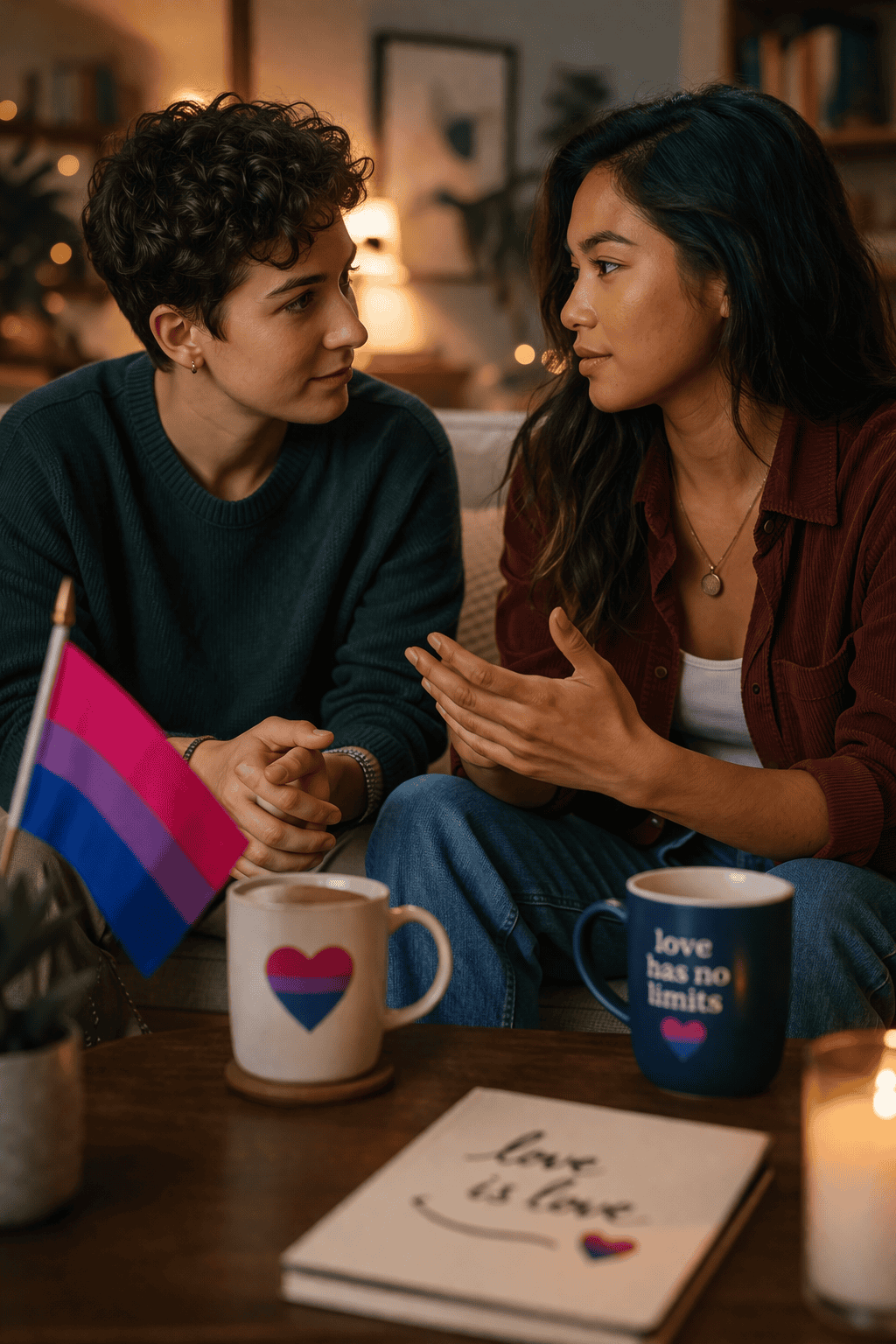
Bisexual relationship myths can create confusion, jealousy, and insecurity around dating, love, and trust. Bisexual people are still regularly described as “incapable of commitment,” more likely to cheat, or unable to feel satisfied with one partner. None of those assumptions follows automatically from someone’s sexual orientation.
These stereotypes can place unnecessary pressure on bisexual people and their partners. Someone may feel expected to prove their loyalty repeatedly, hide part of their identity, or reassure a partner that attraction to more than one gender does not mean they are looking for someone else.
This article breaks down common bisexual relationship myths and replaces them with a more realistic understanding of attraction, commitment, monogamy, and trust.
Love does not erase your identity, and your identity does not prevent you from loving one person deeply.
Common Bisexual Relationship Myths
Many bisexual relationship myths begin by confusing attraction with behaviour. Sexual orientation describes the people someone may have the capacity to feel attracted to. A relationship describes the person or people they have chosen to build a connection with.
Those are related parts of someone’s life, but they are not the same thing.
Myth: Bisexual People Are More Likely to Cheat
Being attracted to more than one gender does not make someone more likely to be unfaithful. Cheating involves choices, boundaries, honesty, and personal responsibility. Sexual orientation does not determine whether someone respects their relationship agreements.
A straight person can cheat. A gay or lesbian person can cheat. A bisexual person can cheat. People of every orientation can also be deeply loyal and committed.
Blaming bisexuality for someone’s behaviour turns an individual decision into a stereotype about an entire group. A person who lies, crosses boundaries, or communicates badly should be held responsible for those actions. Their bisexuality is not the cause.
Myth: Bisexual People Cannot Be Monogamous
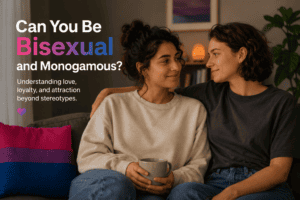
Bisexuality describes attraction, while monogamy describes a relationship agreement. A bisexual person can notice different kinds of people, fall deeply in love with one partner, and choose not to pursue anyone else.
Monogamy does not require someone to lose the ability to notice that other people are attractive. It means they have agreed to direct their romantic and sexual commitment toward one partner.
Many bisexual people are happily monogamous. Others prefer ethical non-monogamy, just as some straight, gay, and lesbian people do. Relationship structure and sexual orientation should not be treated as the same thing.
For a deeper explanation, read Can You Be Bisexual and Monogamous?
Myth: Dating a Bisexual Person Means Competing With Everyone
Some partners worry that bisexuality creates twice as much competition. That idea treats relationships like a numerical contest rather than a bond built through compatibility, trust, and choice.
A bisexual person is not automatically attracted to every man, woman, or non-binary person they meet. Straight people are not attracted to everyone of another gender, and gay people are not attracted to everyone of the same gender. Bisexual attraction is selective too.
Your partner chose to be with you because of who you are and what the relationship means to them. The existence of other people does not make that choice less meaningful.
Myth: Your Current Relationship Determines Your Orientation
A bisexual person does not become straight after entering a different-gender relationship. They do not become gay or lesbian after entering a same-gender relationship either.
A relationship can describe who someone is currently dating. It does not automatically redefine their sexual orientation.
This is one of the most persistent bisexual relationship myths. People often look at a couple from the outside and assign an orientation based entirely on appearances. As a result, bisexual people in “straight-looking” or “gay-looking” relationships may repeatedly feel erased.
Marriage does not erase bisexuality. Monogamy does not erase bisexuality. Loving one partner does not erase the wider capacity for attraction that forms part of someone’s identity.
Myth: Loving Someone Should Switch Off Every Other Attraction
Love does not usually make people stop noticing the rest of the world. Someone can recognise that another person is attractive without wanting to pursue them, betray their partner, or leave their relationship.
Attraction is a feeling. Commitment is a decision supported by actions.
That distinction applies to every orientation. A monogamous straight person may still notice attractive people. The same can be true for gay, lesbian, and bisexual people. Loyalty is demonstrated through boundaries and behaviour, not through pretending that nobody else is ever appealing.
Partners can have different comfort levels around discussing crushes, celebrities, pornography, friendships, or people they find attractive. Healthy couples talk about those boundaries rather than assuming everyone experiences attraction in exactly the same way.
Myth: A Bisexual Person Will Always Miss Another Gender
Another stereotype claims that a bisexual person can never feel fulfilled because one partner cannot represent every gender they may find attractive.
People are not interchangeable representatives of a gender. A partner is an individual with their own personality, values, appearance, humour, and emotional connection. Choosing one person does not mean selecting one gender while permanently grieving everyone else.
A straight man dating one woman is not assumed to need every other type of woman as well. Likewise, a bisexual person does not automatically require partners of several genders to feel complete.
Bisexual relationship myths often treat attraction as a collection of separate needs. In reality, people experience relationships as connections with individuals, not as a checklist of genders.
Why Bisexual Relationship Myths Cause Real Harm
These ideas are not harmless misunderstandings. Bisexual relationship myths can change how people are treated by partners, relatives, friends, and LGBTQ+ communities.
Some bisexual people are pressured to hide previous relationships or experiences. Others are asked invasive questions, accused of dishonesty, or treated as if coming out means they are asking to change the relationship.
A partner may assume that bisexuality means:
- the relationship was built on a lie;
- they were never genuinely attractive to their bisexual partner;
- their partner secretly wants a different gender;
- monogamy will eventually become impossible;
- coming out is preparation for cheating or leaving.
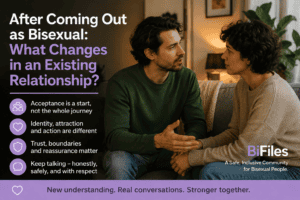
Those fears can feel very real, but they should not automatically be treated as facts. Coming out may simply mean that someone wants to be known honestly by the person they trust.
Supportive conversations make room for both people. The bisexual partner deserves recognition rather than erasure. At the same time, the other partner can ask respectful questions and talk about genuine insecurity without turning stereotypes into accusations.
The Realities Behind Bisexual Relationship Myths
Dating as a bisexual person can involve ordinary relationship challenges alongside additional pressure created by misunderstanding. Many bisexual people feel expected to defend their identity, explain their attraction, or repeatedly demonstrate that they are trustworthy.
That burden can become exhausting. A healthy relationship should not require one partner to pass an endless loyalty test simply because they are bisexual.
Real bisexual relationships are as varied as any others. They can be new or long-term, monogamous or consensually non-monogamous, casual or deeply committed. Some couples discuss attraction openly, while others prefer to keep those thoughts private.
No single relationship arrangement proves or disproves someone’s bisexuality.
How to Talk About Attraction Without Creating Fear
Couples do not need identical experiences of attraction to understand each other. They do need language that separates feelings from intentions and actions.
A bisexual person might say:
“Being bisexual describes my capacity for attraction. It does not mean I am searching for another partner or that our relationship is missing something.”
A partner might respond:
“I want to support your identity. I also notice that some fears are coming up for me, and I would like us to talk about them without making assumptions about you.”
That approach keeps the conversation focused on the actual relationship rather than on bisexual relationship myths inherited from media, previous experiences, or social prejudice.
Tips for Dating as a Bisexual Person
Communicate Clearly
Talk about what bisexuality means to you instead of assuming your partner already understands. You can explain whether you enjoy discussing attraction openly, prefer more privacy, or need reassurance that your identity will be respected.
Set Mutual Boundaries
Every couple needs boundaries. Discuss flirting, friendships, former partners, dating apps, private messages, pornography, and any other subjects that matter to either of you.
Boundaries should apply fairly. A bisexual person should not face stricter rules simply because more than one gender may fall within their potential attraction.
Do Not Accept Endless Suspicion as Normal
Temporary insecurity can often be addressed through honest communication. Constant accusations, invasive monitoring, or demands to deny your identity are different.
You should not have to make yourself smaller, pretend to be straight or gay, or repeatedly apologise for being bisexual in order to keep a relationship calm.
Remember That You Do Not Have to Prove Your Identity
Dating history is not an entrance exam for bisexuality. Someone can be bisexual without having dated or slept with several genders. They can also remain bisexual while spending decades with one partner.
Your current relationship does not have to provide visible evidence of every part of your orientation.
Advice for Partners Facing Bisexual Relationship Myths
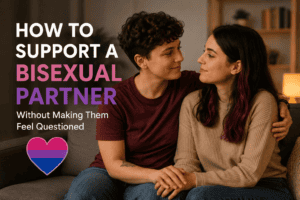
If you are dating a bisexual person, support does not require you to understand everything immediately. It does require a willingness to learn without turning uncertainty into blame.
Trust the Person, Not the Stereotype
Evaluate your partner through their actions. Are they honest? Do they respect agreements? Can you communicate openly? Those questions reveal more about relationship safety than their orientation ever could.
Do Not Treat Coming Out as a Confession
Bisexuality is not wrongdoing. When a partner comes out, they may be sharing something vulnerable because they want greater honesty and emotional closeness.
Questions are understandable, but interrogation can make the person regret trusting you. Begin by listening and recognising that disclosure may have required considerable courage.
Avoid Comparing Yourself With an Entire Gender
You are not competing with all men, all women, or all non-binary people. Your partner’s attraction to you exists because you are you.
Comparing your body, personality, or relationship role with an imagined category of people usually creates anxiety without revealing anything useful about the relationship.
Support Their Identity Without Making It About Sex
A bisexual person can acknowledge their orientation without requesting another partner, a threesome, an open relationship, or permission to experiment. Those are separate conversations that should never be assumed.
Sometimes support is as simple as using the correct label, refusing to make jokes about cheating, and not describing your partner as straight or gay because of the relationship they are currently in.
When Insecurity Does Not Disappear Immediately
Learning that a partner is bisexual can challenge assumptions someone previously held about the relationship. A little time may be needed to process the information.
Processing is different from punishment. A partner can feel surprised or insecure without denying the other person’s identity, demanding intimate details, or treating bisexuality as evidence of future betrayal.
Useful questions include:
- What does being bisexual mean to you personally?
- Are you asking for anything in our relationship to change?
- What would help you feel accepted by me?
- What would help both of us feel secure?
- Which relationship boundaries should we clarify together?
Those questions create room for understanding. Accusations based on bisexual relationship myths usually create defensiveness, shame, and distance instead.
Building Trust Beyond Bisexual Relationship Myths
Trust is built through consistent behaviour, not through sexual orientation. Partners strengthen trust by keeping agreements, communicating honestly, admitting mistakes, respecting boundaries, and making each other feel emotionally safe.
A healthy relationship allows a bisexual person to be fully known without being reduced to a stereotype. It also gives both partners space to express fears, needs, and expectations respectfully.
At BiFiles, we believe that bisexual people should not have to choose between being honest about their identity and being viewed as loyal partners. Acceptance should feel like acceptance, not like permanent suspicion with a more polite name.
Final Thoughts on Bisexual Relationship Myths
Bisexuality does not make someone less capable of commitment. It does not mean they need several partners, cannot be satisfied, or will eventually leave for someone of another gender.
A person’s relationship may show who they love today. Their orientation describes a wider part of who they are. Both truths can exist together without contradiction.
Replacing bisexual relationship myths with honest communication gives couples a stronger foundation. Instead of asking whether bisexual people can be trusted, the better question is whether the two individuals in the relationship behave in ways that deserve trust.
Have you encountered stereotypes in a bisexual relationship, or found a helpful way to explain the difference between attraction and commitment? Read or reply to Which Bisexual Relationship Myth Has Affected You Most? in the BiFiles Forum. You can read without an account and create a free account when you want to reply.
For broader guidance on finding respectful support, read How to Find a Supportive Bisexual Community.