Bisexuality Beyond Labels: Why It Doesn’t Always Fit Into a Box
Bisexuality is often treated as something simple to define, but for many people it can feel more personal, fluid, and complex than one fixed label can explain.

Bisexuality is often treated as something simple to define, but for many people it can feel more personal, fluid, and complex than one fixed label can explain.

Talking to your partner about being bisexual can feel vulnerable, especially if you worry about being misunderstood. This guide helps you approach the conversation with honesty, care, and confidence.

Feeling “not bi enough” is more common than many bisexual people realize. You may question yourself because you have mostly dated one gender, have little sexual experience, are in a relationship that looks straight from the outside, or experience attraction differently depending on gender. Others…

Learn how to build trust with a bisexual partner by separating orientation from behavior, handling insecurity honestly, setting fair boundaries, and focusing on consistent actions rather than stereotypes.

Wondering whether you might be bisexual? Explore common signs, different forms of attraction, changing feelings, relationships, labels, and reflection questions without pressure to decide immediately.

Do you need a bisexual label? Explore when identity labels provide clarity and community, when they feel restrictive, and why changing or using no label can also be valid.

Finding a supportive bisexual community can make an enormous difference when you feel invisible, isolated, or uncertain about where you belong. Many bisexual people grow up in a world that still discusses sexuality mainly as straight or gay, leaving little room for experiences that do…

Bisexual relationship myths can create confusion, jealousy, and insecurity around dating, love, and trust. Bisexual people are still regularly described as “incapable of commitment,” more likely to cheat, or unable to feel satisfied with one partner. None of those assumptions follows automatically from someone’s sexual…

Coming out twice can mean changing from an earlier sexuality label to bisexual or repeatedly explaining an identity others keep erasing. Explore disclosure, privacy, relationships, community, and changing labels.
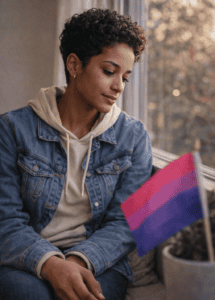
Bisexual mental health can be affected by erasure, stereotypes, isolation, relationship pressure, and feeling excluded from both straight and LGBTQ+ spaces. Learn how to find safer, affirming support.
Continue exploring BiFiles
BiFiles Articles is part of the wider BiFiles Network. You can read personal stories, compare bi-friendly platforms, join forum discussions, or start with live chat at your own pace.