Am I Bisexual If My Attraction Changes Over Time?

Yes, you can be bisexual if your attraction changes over time. Bisexuality does not require equal attraction to different genders every day, in every relationship, or throughout every stage of your life.
Attraction can shift, grow, become clearer, or feel different depending on the person, emotional connection, life experience, confidence, and sense of safety. Sometimes attraction itself changes. At other times, someone becomes better able to recognize feelings that were already present.
If you have wondered, “Am I still bisexual if my attraction changes?” you are not alone. Many bisexual people experience attraction in ways that are real without being perfectly equal, predictable, or easy to explain.
Changing feelings do not automatically make your identity fake, confused, or less valid. You are also allowed to change the words you use when your understanding of yourself changes.
You may also find it helpful to read Bisexuality Beyond Labels, Feeling “Not Bi Enough”?, and Do You Need a Label as a Bisexual?
What Does Bisexuality Mean?
Bisexuality generally means having the capacity to experience attraction to more than one gender. That attraction may be romantic, emotional, physical, sexual, or a combination of these.
It does not require attraction to all genders. It does not require a perfect 50/50 balance. Bisexuality also does not require your attraction to remain unchanged throughout your entire life.
Some bisexual people experience attraction to different genders in similar ways. Others notice important differences.
- Attraction to one gender may happen more frequently.
- Romantic attraction may feel stronger in one direction.
- Sexual attraction may feel more immediate toward another gender.
- Trust or emotional connection may influence attraction.
- Preferences may shift during different stages of life.
All of these experiences can fit within bisexuality.
Can Bisexual Attraction Change Over Time?
Yes. Bisexual attraction can change over time.
For some people, attraction feels stronger toward one gender during one period of life and shifts later. For others, it changes depending on the individual person, emotional bond, relationship situation, or growing self-acceptance.
This does not automatically mean you misunderstood yourself before. Your previous understanding may have been honest based on what you felt, recognized, or could safely name at that time.
Human attraction is not always a fixed setting. It may be influenced by:
- emotional connection;
- personal confidence;
- past relationships;
- life experience;
- mental health and stress;
- social pressure or shame;
- religious or cultural expectations;
- whether you feel safe enough to notice certain feelings;
- having better language to describe your experience.
Sometimes your bisexual attraction changes over time. Sometimes your ability to understand it changes. Both can be part of a genuine bisexual experience.
Changing Attraction Is Not the Same as Being Dishonest
People often fear that a changing label or attraction pattern means they were lying before.
That is usually too harsh.
A label describes your best understanding of yourself at a particular time. It is not a permanent contract that prevents you from learning something new.
You might once have genuinely believed you were straight, gay, lesbian, asexual, greysexual, or something else. Later experiences or reflection may reveal that bisexual, pansexual, queer, or no label feels more accurate.
Updating your language does not automatically turn your earlier identity into a lie.
A label can change because your understanding changed. That does not make your past dishonest.
Do I Have to Be Equally Attracted to Different Genders?
No. You do not have to experience equal attraction to different genders to be bisexual.
This is one of the most persistent myths about bisexuality. Many people imagine a perfect 50/50 split, but real attraction is usually more personal and complicated.
You might feel more frequently attracted to women while still experiencing genuine attraction to men. You might usually date men while knowing your attraction is not limited to men. Another possibility is feeling stronger romantic attraction toward one gender and stronger physical attraction toward another.
None of those patterns automatically disqualifies you from being bisexual.
Bisexuality is about the capacity for attraction to more than one gender. It is not a math test.
What If My Bisexual Attraction Comes and Goes?
Some bisexual people notice that attraction seems to come and go. It may become stronger in one direction for weeks, months, or years before shifting again.
Some people call this the “bi-cycle,” although not every bisexual person uses or relates to that term.
A shifting pattern can make you question yourself repeatedly. During a period of strong attraction to one gender, you may wonder whether your previous feelings were imagined. When attraction shifts again, you may feel as though you must restart the entire identity process.
You do not need to treat every change as evidence that your identity has collapsed.
A quieter period of attraction does not erase earlier feelings. A stronger new attraction does not automatically invalidate your past.
You are allowed to notice changes without immediately turning them into a crisis.
For a focused discussion about attraction feeling different across genders or changing over time, read or reply to What If Your Attraction Feels Different Across Genders? in the BiFiles Forum. You can read without an account and create a free account when you want to reply.
Am I Bisexual If I Mostly Like One Gender?
You can still be bisexual if you mostly feel attracted to one gender, as long as attraction to more than one gender feels true to your experience.
Some bisexual people have a strong preference. Others experience only a slight preference. Preferences may also change over time.
One person might usually feel drawn to women but occasionally experience meaningful attraction to men. Another may mostly date men while still recognizing attraction to women or non-binary people.
Frequency alone does not determine orientation. Rare attraction can still be real attraction.
Can Romantic and Sexual Attraction Feel Different?
Yes. Romantic and sexual attraction do not always follow identical patterns.
You may feel romantic attraction more easily toward one gender while experiencing stronger physical attraction toward another. Emotional closeness, trust, and relationship context may also influence how attraction develops.
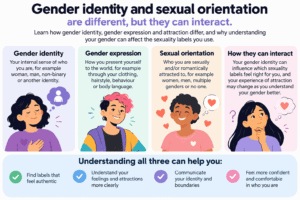
Some people use additional labels to describe this, while others simply identify as bisexual without dividing every part of their attraction into separate categories.
You are not required to build a perfect technical explanation before your experience becomes valid.
For a shorter explanation, visit the Identity & Attraction FAQ guide. You can also read or join the BiFiles Forum discussion Can You Be Bisexual and Still Feel More Emotionally Connected to One Gender?
What If I Previously Identified as Lesbian?
You can identify as bisexual after previously identifying as lesbian.
Realizing that you experience attraction to men does not mean your earlier lesbian identity was fake, foolish, or dishonest. It may have accurately described what you understood, felt, or could safely recognize at the time.
This change can still be emotionally difficult.
Someone may feel grief about losing a familiar identity. They may worry about their place in lesbian community, feel embarrassed about changing labels, or fear that others will use their experience to dismiss lesbian identities as temporary.
Those feelings deserve care.
Recognizing attraction to men later does not erase your relationships with women, your queer history, or the community that mattered to you. It simply means your current understanding may be broader than it was before.
BiFiles generally prefers the wording “previously identified as lesbian” rather than “ex-lesbian,” because the latter can sound as though lesbian identity is something that was cured, abandoned, or never real.
Can I Be Bisexual After Identifying as Gay or Straight?
Yes. People may recognize bisexuality after previously identifying as gay or straight.
A man who once identified as gay may later recognize meaningful attraction to women. Someone who lived as straight for many years may eventually acknowledge same-gender attraction that was ignored, misunderstood, or suppressed.
Neither situation automatically means the earlier identity was deliberately false.
You can say:
That was the closest word I had before, but bisexual feels more accurate now.
You do not owe everyone a detailed explanation or a defence of why your wording changed.
If a previous identity label no longer feels accurate, you can also read or reply to the BiFiles Forum discussion What If the Label That Once Fit You Starts to Feel Different?. You do not have to dismiss your past to describe yourself differently today.
Can I Be Bisexual and Greysexual?
Yes. Bisexuality and greysexuality are not necessarily opposites.
Bisexuality can describe the genders toward whom you may experience attraction. Greysexuality can describe how rarely, weakly, or under what circumstances sexual attraction occurs.
Someone may therefore experience sexual attraction infrequently while still recognizing that, when it occurs, it is not limited to one gender.
You may use both labels, one label, queer, or no label. The purpose of language is to help you describe yourself, not force you into one perfect box.
What Role Can Trauma or Safety Play?
Trauma, fear, or unsafe experiences can affect how comfortable someone feels around particular people or genders. They may influence trust, avoidance, emotional safety, and the ability to explore attraction.
However, it is important not to claim that trauma automatically causes someone to be lesbian, gay, bisexual, or straight.
Orientation should not be diagnosed from trauma.
A more careful distinction is that trauma may affect how attraction is experienced, interpreted, or acted upon. It can make certain feelings difficult to separate from fear.
You are allowed to explore these questions gently without forcing yourself toward a predetermined answer.
For a respectful conversation about how safety, trust, and past experiences may affect the way attraction is understood, read or reply to Can Fear, Trauma, or Feeling Unsafe Affect How You Experience Attraction? in the BiFiles Forum. You do not need to share traumatic experiences or private details.
What If I Only Realized Later in Life?
Realizing you are bisexual later in life is common.
Some people understand their attraction when they are young. Others only recognize it after years of relationships, marriage, parenting, self-reflection, or exposure to more inclusive language.
A later realization does not make bisexuality less real.
Many people grow up with limited ideas about sexuality. They may assume they are straight because that is what everyone around them expects. Same-gender attraction may be dismissed as admiration, curiosity, friendship, or something too inconvenient to examine.
Others may have been openly bisexual when younger, later suppressed that identity during a marriage or family life, and then recognized it again many years later.
Later-in-life discovery can bring relief and excitement, but also grief, anger, or sadness about lost time.
All of those reactions can coexist.
Does a Past Marriage Make My Bisexuality Less Real?
No. A past or current marriage does not invalidate bisexuality.
A woman married to a man can still be bisexual. A man who was married to a woman can later recognize strong attraction to men without automatically proving that the entire marriage was false.
Relationships can be loving, complicated, meaningful, imperfect, or finished for many reasons. Sexuality is only one part of that history.
New same-gender experiences may clarify what you want in the future. They do not automatically rewrite every feeling you experienced in the past.
A new experience can clarify your future without making your past a lie.
For more support, read I’m Married and Think I Might Be Bisexual. What Do I Do?
What If I Am Currently in a Relationship?
Being in a relationship does not erase bisexuality.
If you are bisexual and dating a man, that does not automatically make you straight. Dating a woman does not necessarily make you lesbian. A relationship with a non-binary person also does not invalidate a bisexual identity.
Your current partner shows who you are with. They do not define the complete range of attraction you may experience.
Recognizing bisexuality does not automatically mean your relationship needs to change. Acknowledging attraction, discussing identity, exploring sexually, opening a relationship, and ending a relationship are all separate decisions.
You are allowed to recognize your identity without immediately turning it into action.
Does Changing Attraction Mean It Was Just a Phase?
No. Changing attraction does not automatically mean bisexuality was “just a phase.”
The phase stereotype pressures bisexual people to prove that their identity is permanent, simple, and consistent. Real human experiences are often more complicated than that.
Your attraction can develop and still be real. Your understanding can change and still be honest. A label can fit for years and later be replaced without becoming meaningless in retrospect.
Even when an identity does change, that does not justify dismissing what someone felt at the time.
Growth is not the same as pretending.
Why Changing Bisexual Attraction Can Feel Stressful
Changing bisexual attraction can feel stressful because people often want certainty. They want a label that explains everything permanently and reassures them that they are not confused or misleading anyone.
That need for certainty is understandable.
Sexuality is not always something you solve once and never revisit. For many people, self-understanding develops in layers.
You may be trying to answer too many questions at once:
- What does this attraction mean?
- Am I allowed to call myself bisexual?
- Was my previous label wrong?
- Will other people believe me?
- What if my feelings change again?
- Do I have to tell my partner or family?
- Will I lose my place in a community?
- Do I need experience before I can know?
You do not need to solve all of those questions immediately.
Sometimes the most useful first step is simply noticing what you feel without judging yourself for it.
You Do Not Need a Perfectly Linear Coming-Out Story
Some people believe a “real” LGBTQ+ identity should follow a simple path: recognize it early, choose one label, come out once, and never question it again.
Many actual lives do not look like that.
You may come out more than once. Your language may change. A label you once used proudly may later feel incomplete. Years of suppression may separate one period of recognition from another.
None of that removes your right to community or support.
You do not owe anyone a perfectly linear coming-out story.
You Do Not Need a Perfect Label Before You Belong
Labels can provide language, community, and relief. For many people, the word bisexual finally gives shape to feelings that once seemed difficult to understand.
But a label should help you breathe, not make you feel trapped.
If bisexual feels like the most useful word for your experience now, you are allowed to use it. If your understanding becomes more detailed later, that does not mean you failed.
You can also use bisexual, pansexual, queer, questioning, unlabeled, or another term while you continue learning about yourself.
No immediate final answer is required.
You do not need a perfect identity statement before you are allowed to read stories, seek support, join conversations, or feel connected to other people.
Questions That May Help You Understand Your Attraction
If you are unsure whether bisexuality fits, these questions may help you reflect:
- Have I felt genuine attraction to more than one gender, even if not equally?
- Does attraction feel romantic, physical, emotional, sexual, or different in each direction?
- Do my feelings change depending on emotional connection or trust?
- Have I dismissed certain attractions because they confused or frightened me?
- Did social, religious, or family pressure influence what I allowed myself to recognize?
- Am I trying to preserve an old label because changing it feels embarrassing?
- Do I feel pressured to choose a simpler label for someone else’s comfort?
- Does the word bisexual bring relief, recognition, or room to breathe?
These questions are not a diagnostic test. They are simply ways to listen to yourself with more patience.
When to Give Yourself More Time
If you feel overwhelmed, it is okay to take your time.
You do not have to rush into a label, come out before you feel safe, or explain every shift in attraction to other people.
Giving yourself more space may help when:
- you are still sorting through your feelings;
- other people are pressuring you to choose a label;
- you fear losing family, community, or relationship support;
- you feel embarrassed about changing how you identify;
- your attraction feels genuine but difficult to describe;
- you are trying to separate attraction from fear or trauma;
- you think you need experience before your identity can count.
Clarity often becomes easier when you stop forcing yourself to produce an immediate, permanent answer.
Helpful External Resources
For broader explanations of bisexuality and bi+ identities, visit the Bisexual Resource Center or read The Trevor Project’s guide to understanding bisexuality.
Can Bisexual Attraction Change Over Time? Yes
Yes. You can be bisexual if your attraction changes over time.
Bisexual attraction does not require equal attraction, constant attraction, or one predictable lifelong pattern. It can include shifting feelings, different preferences, uncertainty, discovery, and growth.
Your label may also change as you understand yourself more clearly. Previously identifying as straight, gay, lesbian, asexual, greysexual, or something else does not automatically make your current bisexual identity less valid.
Changing attraction does not make you fake. A new label does not necessarily make your former label dishonest. Later discovery does not invalidate earlier relationships.
You are allowed to use the language that fits you now.
You are allowed to take your time.
Your understanding of yourself can grow without every change becoming a problem.
Explore More on BiFiles
If your attraction changes over time, you may also be exploring labels, self-doubt, later-in-life discovery, relationships, or community support. These BiFiles resources can help you continue without pressure to define everything immediately.
- Am I Bisexual? Signs, Questions & What It Really Feels Like
- Bisexuality Beyond Labels: Why It Doesn’t Always Fit Into a Box
- Feeling “Not Bi Enough”? Why So Many Bisexual People Struggle With This
- Do You Need a Label as a Bisexual? Identity, Freedom and Self-Acceptance
- I’m Married and Think I Might Be Bisexual. What Do I Do?
You can also explore the wider BiFiles Network at your own pace: