Bisexual vs Pansexual: What’s the Difference — and Does It Matter?
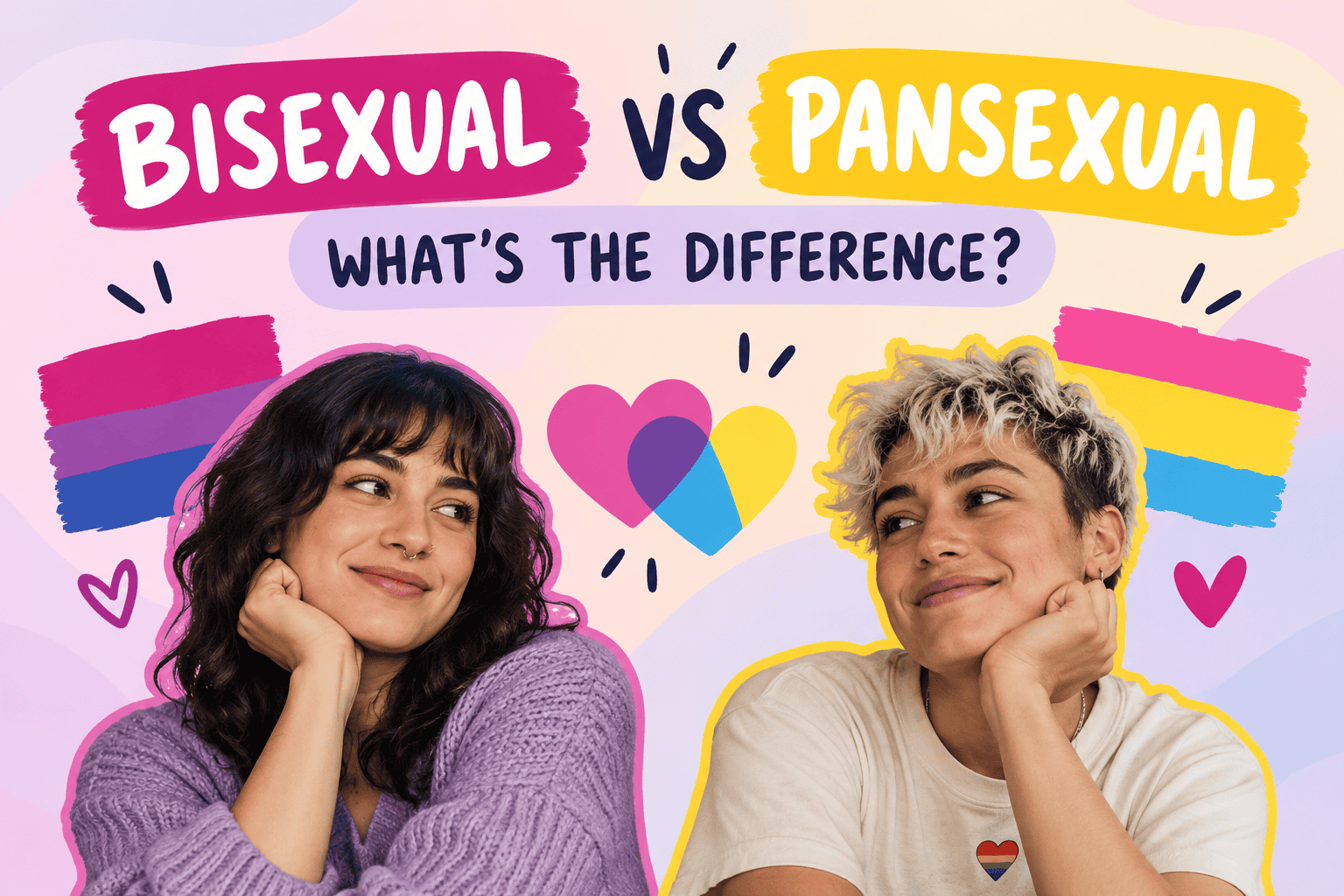
What is the difference between bisexual and pansexual? It sounds like a question that should have one simple answer. In practice, the two identities can overlap considerably, and people do not always draw the boundary between them in the same place.
A common starting point is that bisexuality describes the capacity for attraction to more than one gender, while pansexuality is commonly used for attraction to people of any gender or attraction in which gender is not a defining limit.
Those definitions can be useful. But they do not create a perfect test that can tell every person whether they are “really” bisexual or pansexual.
What does bisexual mean?
Bisexuality is commonly understood as the capacity for romantic and/or sexual attraction to more than one gender.
That attraction does not have to be equal. It does not have to happen at the same time, in the same way, or with the same intensity.
Some bisexual people experience gender as an important part of attraction. They may notice different patterns, preferences, or feelings toward different genders.
For other bisexual people, gender matters very little. They may be attracted primarily to the individual and still find bisexual to be the most accurate or meaningful label for themselves.
This is one reason definitions such as “bisexual means gender matters” are too restrictive. They may describe some bisexual people, but not all of them.
What does pansexual mean?
Pansexuality is commonly used to describe the potential for attraction to people of any gender, or attraction in which gender is not a defining boundary.
Some pansexual people describe this as attraction regardless of gender. Others simply feel that pansexual communicates their experience more accurately than bisexual does.
But pansexuality does not mean being attracted to everyone. Just like bisexual people, pansexual people can have preferences, types, boundaries, and people they are not attracted to.
The word describes the potential range of attraction, not universal attraction to every person.
So what is the actual difference between bisexual and pansexual?
There is a difference in how the terms are commonly described, but there is also substantial overlap.
A bisexual person may be attracted to multiple genders or people of any gender. A pansexual person may also be attracted to people across genders. For some people, whether gender plays a role in that attraction helps explain why one label feels better than the other.
For others, that distinction does not work at all.
Two people could describe very similar patterns of attraction and still identify differently. One might call themselves bisexual because that is the community and identity they have known for years. Another might feel that pansexual communicates their relationship to gender more clearly.
Neither person needs to be mistaken.
Is pansexuality more inclusive of trans and non-binary people?
No. Pansexuality should not be treated as the trans-inclusive alternative to bisexuality.
Bisexuality does not inherently exclude trans or non-binary people. Trans men are men and trans women are women, and bisexual attraction can also include non-binary people.
Being attracted to someone who is trans or non-binary therefore does not automatically make someone pansexual.
This misconception often comes from defining bisexuality as attraction only to cisgender men and cisgender women. That is not a reliable definition of bisexuality.
For a fuller explanation, read Bisexuality, Trans People and Non-Binary Inclusion: What “Bi” Actually Means.
Does bisexual mean gender matters, while pansexual means gender does not?
This can be a useful personal distinction, but it is not a universal rule.
Some bisexual people do experience attraction differently depending on gender. They may have preferences, find different qualities attractive, or notice that romantic and sexual attraction do not follow exactly the same pattern.
But other bisexual people say gender has little or no importance in determining who attracts them.
Likewise, pansexual people do not all describe their attraction in exactly the same language.
So “gender matters = bi, gender does not matter = pan” may help some individuals explain themselves, but it should not be imposed as a rule for everyone else.
Why is there so much disagreement about the definitions?
Identity language develops through history, communities, activism, culture, and personal use. It does not always behave like a scientific classification system in which every category has perfectly separate boundaries.
That becomes especially visible with bisexual and pansexual identities.
During BiFiles research into wider conversations about these labels, people offered many different distinctions. Some described bisexuality as attraction to two genders. Others described it as attraction to more than one gender, to their own and other genders, or across multiple genders. Pansexuality was variously described as attraction to all genders, regardless of gender, or without gender being important to attraction.
Some people saw a clear personal distinction between bi and pan. Others considered the overlap so large that either label could describe them.
These disagreements are useful evidence of how people actually use identity language, but one person’s definition should not automatically become a rule for everyone else.
Why might someone choose bisexual instead of pansexual?
There can be many reasons.
Someone may have identified as bisexual long before they encountered the word pansexual. They may feel connected to bisexual history or community. They may simply recognize themselves immediately in the word bisexual.
For some people, gender does play a noticeable role in attraction, making bisexual feel more intuitive. For others, it does not — but bisexual still remains the label they prefer.
Practical communication can matter too. Some people use the term that people around them are more likely to understand without a long explanation.
None of those reasons requires proving that pansexual would be technically incorrect.
Why might someone choose pansexual instead of bisexual?
Someone may feel that pansexual communicates something important about how they experience attraction across genders.
They may particularly connect with language such as attraction regardless of gender, feel that gender does not meaningfully limit who they could be attracted to, or simply feel more recognized in pansexual communities and descriptions.
That does not require bisexuality to be narrower, binary, or less inclusive.
Pansexual can be meaningful on its own terms without defining it by making bisexuality smaller.
Can I identify as both bisexual and pansexual?
Yes. Some people use both labels because both communicate something useful about their attraction or community identity.
Others use bisexual as a broader umbrella and pansexual as a more specific description. Some do the reverse in everyday conversation, depending on what they are trying to communicate.
You do not have to use both simply because your experience could fit both definitions. But you also do not have to choose only one if both are meaningful to you.
Can my label change over time?
Yes.
People sometimes move from bisexual to pansexual, from pansexual to bisexual, use queer instead, use several labels together, or stop using a specific label altogether.
That does not necessarily mean their underlying attraction changed dramatically.
Sometimes what changes is their understanding of themselves. Sometimes they discover new language. Sometimes a different community feels more comfortable. And sometimes an old label simply stops feeling useful.
Changing language later does not make the label you used earlier dishonest.
What if someone tells me I’m using the wrong label?
Another person can explain how they understand bisexuality or pansexuality. They can share definitions, history, and their own experience.
That is different from deciding your identity for you.
During BiFiles research, people described being told they should identify as pansexual because they could be attracted to trans or non-binary people. Others described moving away from the bisexual label partly because of assumptions about what bisexuality supposedly excluded.
When definitions become rules imposed on another person, useful discussion can turn into label policing.
You can listen to new information and reconsider your language without accepting the idea that someone else gets the final vote.
Do I need to figure out whether I’m bisexual or pansexual?
No.
If one label clearly feels right, you can use it. If both feel useful, you can use both. If queer, questioning, another term, or no label feels better, that is also an option.
You can also leave the question open while you learn more about your attraction.
A label can help you describe yourself, find community, and communicate your experience. It does not need to solve every ambiguity in your sexuality.
If choosing a label has started to feel more like passing an exam than understanding yourself, it may help to return to a simpler question: Which language, if any, helps me describe myself most honestly right now?
How do other people choose between bi, pan, and other labels?
BiFiles has opened a Forum discussion specifically for lived experiences around this question. You can read quietly or share what influenced your own choice:
What Made Bisexual, Pansexual or Another Label Feel Right for You?
For a shorter answer, visit the Trans, Gender & Bisexuality FAQ guide and open “What is the difference between bisexual and pansexual?”
If you are questioning whether you need any label at all, read Do I Need a Bisexual Label?.