I’m Married and Think I Might Be Bisexual. What Do I Do?

Realizing you might be bisexual while married can feel confusing, emotional, or frightening. You may wonder what it means for your marriage, your partner, your past, your future, and the version of yourself you thought you understood.
Some people recognize bisexual attraction after years or decades of marriage. Others always sensed something but pushed it aside, lacked the right language, or believed their feelings did not “count” because they had only dated one gender.
Start here: you do not have to make a sudden decision today.
Questioning your sexuality while married does not automatically mean your marriage is over. It does not prove that you have been lying, chosen the wrong partner, or need to change your relationship immediately.
Something inside you may be asking for attention. That deserves curiosity and care rather than panic.
You may also find it helpful to read Am I Bisexual? Signs, Questions & What It Really Feels Like, Can You Be Bisexual and Monogamous?, and Am I Bisexual If My Attraction Changes Over Time?
Married and Think You Might Be Bisexual? Slow Down First
When bisexual feelings become harder to ignore, the first instinct may be to rush toward a final answer.
You might feel pressure to decide:
- whether you are definitely bisexual;
- whether you must tell your partner immediately;
- whether your marriage is still honest;
- whether you need sexual experience with another gender;
- whether the relationship should open or end;
- whether your entire past needs to be reinterpreted.
These are major questions, but they do not all require answers at the same time.
People usually make clearer decisions when they are not acting from shame, panic, guilt, secrecy, or fear. Slowing down does not mean avoiding the truth. It creates enough room to understand what the truth actually means for you.
You can take your feelings seriously without treating them as an emergency.
Being Married and Bisexual Does Not Mean Your Marriage Is Wrong
Many married bisexual people love their partners deeply.
Some are in different-gender marriages. Others are married to someone of the same gender or to a non-binary partner. Many are monogamous, while others have consensually chosen a different relationship structure.
Bisexuality generally means having the capacity to experience attraction to more than one gender. It does not automatically mean:
- you married the wrong person;
- your love for your spouse was fake;
- you cannot remain faithful;
- your partner can never be enough;
- you must explore sexually;
- your relationship needs to end.
Your orientation describes a broader capacity for attraction. Your marriage describes one particular relationship and the person you chose to build a life with.
Those two truths can exist together.
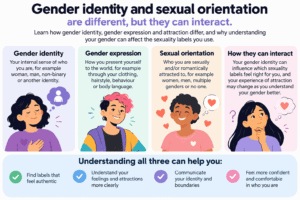
Attraction, Identity, Desire, and Action Are Different
One reason bisexual questioning can feel overwhelming is that several different experiences are often treated as one problem.
It may help to separate them:
- Attraction: noticing romantic, emotional, physical, or sexual interest.
- Identity: the language you use to understand or describe yourself.
- Desire: something you may want, imagine, miss, or feel curious about.
- Action: what you choose to do.
- Relationship agreement: the boundaries you and your partner have established.
Recognizing attraction does not automatically require action. Using the word bisexual does not automatically mean you want to change your marriage.
A fantasy is not a commitment. Curiosity is not permission. Identity is not a demand for another relationship.
Some people eventually decide that they want to explore or renegotiate their relationship. Others feel relieved simply to understand themselves more accurately.
Neither outcome should be assumed before you have had time to reflect.
Why Bisexual Feelings Can Appear Later in Marriage
Later recognition does not necessarily mean the attraction suddenly appeared from nowhere.
Many people grow up with heterosexuality treated as the default. They date, marry, and build a family before ever considering that attraction to more than one gender might apply to them.
Earlier feelings may have been interpreted as:
- admiration;
- friendship;
- curiosity;
- jealousy;
- wanting to look like someone;
- a harmless fantasy;
- something “everyone” occasionally experiences.
Other people knew but suppressed those feelings because of religion, family expectations, fear, social pressure, or the belief that bisexuality was not a real option.
Greater safety, inclusive language, online community, therapy, ageing, or a specific emotional connection can make old feelings easier to recognize.
The understanding may be new even when parts of the experience are not.
Does Realizing You Are Bisexual Make Your Marriage a Lie?
No. A later realization does not automatically make your marriage or previous love dishonest.
You may have genuinely loved your spouse, desired them, chosen the relationship, and built a meaningful life together. Recognizing a broader capacity for attraction does not erase those experiences.
People understand themselves using the information and language available to them at the time. Discovering something later does not prove that you deliberately deceived anyone earlier.
A new understanding of yourself does not automatically turn your past into a lie.
That does not mean every marriage remains unchanged after this discovery. It means any future decisions should be based on the actual health and needs of the relationship, not on the assumption that bisexuality invalidates everything that came before.
Why You May Feel Guilty, Scared, or Confused
If bisexuality was presented to you as a phase, threat, secret, or sign of instability, recognizing it within marriage can trigger guilt quickly.
You may feel guilty for:
- noticing attraction;
- not understanding yourself sooner;
- wondering what another experience might feel like;
- wanting to talk about bisexuality;
- not feeling ready to talk;
- keeping a private part of yourself unexplored;
- fearing that your partner will feel inadequate.
Guilt is not always evidence that you have done something wrong. Sometimes it appears because you are touching a part of yourself that was never given safe language.
Try separating facts from fears.
- Fact: “I have experienced attraction to more than one gender.”
- Fear: “This means my marriage is destroyed.”
- Fact: “I am curious about a part of myself.”
- Fear: “Curiosity means I will inevitably cheat.”
- Fact: “I did not have this language before.”
- Fear: “That means I lied throughout my entire life.”
The fears may feel powerful, but they are not automatic conclusions.
What Does Being Married and Bisexual Mean for Monogamy?
Bisexuality does not determine whether someone is monogamous.
A bisexual person can choose lifelong exclusivity with one partner. Being capable of attraction to more than one gender does not create an obligation to pursue every kind of attraction.
Many married people of every orientation continue to notice others occasionally. Monogamy is not usually based on losing all capacity for outside attraction. It is based on respecting the agreements made with a partner.
Someone may be bisexual and fully satisfied in a monogamous marriage. Another person may discover that non-monogamy appeals to them, but that preference should not be blamed on bisexuality alone.
For a fuller explanation, read Can You Be Bisexual and Monogamous?
What If You Feel You Missed Out?
Later discovery can bring grief about experiences you never had.
You might wonder what dating another gender would have felt like, whether you lost time, or whether part of your identity remained unexplored because you followed the path expected of you.
That grief can be real even when your marriage is loving.
Feeling sadness about an unlived possibility does not automatically mean you want to leave your spouse. People can value the life they chose while still wondering about paths they did not take.
It may help to ask:
- Do I want a different experience, or do I want recognition?
- Am I grieving lost time, or am I unhappy in my current life?
- Would being seen as bisexual reduce some of this pain?
- Is the fantasy mainly about freedom, youth, novelty, or a specific gender?
- Can I honour this part of myself without crossing my relationship boundaries?
Not every unlived possibility needs to become a lived experience. The feeling still deserves acknowledgment.
Do You Need Experience With Another Gender to Know?
No. You do not need sexual or romantic experience with multiple genders before identifying as bisexual.
Experience can clarify feelings for some people, but it does not create orientation. People often recognize attraction before dating or having sex.
You may know that bisexuality fits without ever acting outside your marriage.
Testing your sexuality through secret encounters can create relationship harm without necessarily creating the clarity you hoped for. One experience may feel meaningful, disappointing, confusing, or emotionally complicated.
A person is also more than a “test” of your identity. Any exploration should involve honesty, consent, realistic expectations, and respect for everyone affected.
Do You Have to Tell Your Partner Immediately?
Not always. Coming out to a spouse can be important, but timing, safety, clarity, and relationship context matter.
During the earliest stage of questioning, you may not yet know what you are trying to communicate.
These statements describe different conversations:
- “I think I may be bisexual.”
- “I know I am bisexual and want you to understand me.”
- “I am struggling with curiosity and need support.”
- “I want to change our relationship agreement.”
- “I am questioning whether this marriage still works for me.”
Before talking to your partner, ask yourself:
- What do I want them to understand?
- Am I seeking honesty, reassurance, support, permission, or change?
- Which parts am I certain about?
- Which parts am I still questioning?
- Can my partner usually handle vulnerable conversations respectfully?
- Could disclosure become unsafe, controlling, or threatening?
- What support will I have afterward?
Taking time to prepare is not automatically dishonest. However, keeping something private indefinitely may become painful when emotional intimacy depends on being known more fully.
There is no single deadline that fits every marriage.
For additional guidance, read Do I Have to Come Out as Bisexual? and How to Talk to Your Partner About Being Bisexual.
How to Explain That Bisexuality Does Not Automatically Change the Marriage
A spouse may hear “I am bisexual” and assume the disclosure means you want another person or a different life.
Be as clear as you can about what the conversation does and does not mean.
I have realized that bisexual describes me. I am telling you because I want to be honest and known more fully. This does not automatically mean I want to leave, cheat, or change our relationship.
When uncertainty remains, you can say that too:
I am still understanding what this means for me. I do not have every answer yet, but I do not want fear to define the conversation.
Your partner may need reassurance, but you should not promise things you do not know or agree to erase your identity just to end the discomfort quickly.
What If Your Partner Feels Hurt or Insecure?
A partner may feel surprised, frightened, or uncertain, especially when bisexuality was never discussed before.
They may wonder:
- Was I ever enough?
- Were you attracted to me?
- Do you want someone else?
- Will you eventually leave?
- Was our marriage based on a misunderstanding?
- Do you need experiences I cannot provide?
These fears can be addressed without treating them as facts.
You can reassure your partner about your actual feelings, intentions, and commitments. At the same time, they need to avoid turning insecurity into accusations, monitoring, punishment, or pressure.
A supportive response does not require instant understanding. It does require a willingness to listen and learn.
Your spouse may find My Partner Came Out as Bisexual. What Now? helpful.
What If Your Partner Reacts Badly?
Surprise, sadness, or temporary insecurity are different from harmful behaviour.
A partner should not:
- threaten or intimidate you;
- out you without permission;
- mock your identity;
- claim you are automatically unfaithful;
- demand access to your phone or private messages;
- pressure you into a threesome or sexual exploration;
- insist that you must choose between being bisexual and staying married;
- use children, housing, or finances as punishment.
Insecurity may explain a reaction, but it does not justify control or abuse.
If disclosure could place you in danger, prioritize practical safety before beginning the conversation. Arrange support, transport, private communication, and somewhere safe to stay when necessary.
What Can You Explore Privately First?
Private exploration does not have to mean harmful secrecy. It can mean creating enough space to understand your thoughts before asking someone else to react.
You might:
- read accurate information about bisexuality;
- write down memories and current feelings;
- notice patterns in romantic, emotional, and sexual attraction;
- learn about different labels without forcing a final choice;
- read stories from people who discovered bisexuality later in life;
- talk anonymously in a moderated support space;
- speak with an LGBTQ+ aware therapist;
- separate curiosity from relationship dissatisfaction.
Useful reflection questions include:
- Have I experienced this attraction before?
- Did I dismiss it because it felt unsafe or inconvenient?
- Is the attraction romantic, sexual, emotional, or difficult to separate?
- Do I mainly want recognition, exploration, or change?
- Am I afraid of the feeling itself or of what others may assume?
- What would become calmer if I stopped judging myself?
You do not need to produce a perfect identity statement before seeking support.
What Not to Do in Panic
Overwhelming emotions can create an urge for immediate relief. Rushed choices, however, often produce more pain than clarity.
Try not to:
- force yourself into a label solely to end uncertainty;
- confess every thought during a crisis moment;
- promise your partner that nothing will ever change when you do not know;
- secretly test your attraction outside the relationship;
- open the marriage as an emergency solution;
- assume one crush defines your entire future;
- end a marriage before separating identity questions from relationship problems;
- seek sexual validation from someone who treats your vulnerability carelessly.
You can move carefully without denying what you feel.
What If Your Marriage Is Happy?
A happy marriage does not disprove bisexuality.
Many bisexual people love their spouses, enjoy intimacy, feel emotionally secure, and have no desire to leave. Attraction beyond the relationship may still exist.
Bisexuality does not always signal that something is missing. It can simply describe how your capacity for attraction works.
Instead of asking only, “What is wrong with my marriage?” consider asking:
Can I understand this part of myself without turning it against the relationship I value?
For some couples, greater openness about identity creates deeper intimacy rather than distance.
What If Your Marriage Is Already Struggling?
When a marriage is already distant, resentful, unsafe, or emotionally disconnected, bisexual questioning can become tangled with existing problems.
You may be asking several questions:
- Am I bisexual?
- Am I lonely?
- Do I feel unseen?
- Is this relationship emotionally safe?
- Have we lost intimacy?
- Do I want another gender, or simply another kind of relationship?
- Would I still be unhappy if bisexuality were not part of the picture?
These questions may influence each other, but they deserve separate attention.
Bisexuality should not be blamed for every problem in the marriage. Relationship pain should not be treated as proof of bisexuality either.
Couples counseling may help when both partners are willing and the relationship is not abusive. Individual support can also help you explore identity without making your spouse responsible for every stage of the process.
What About Children, Family, and the Life You Built?
For married people, sexuality questions are rarely isolated from the rest of life.
You may worry about children, extended family, housing, finances, religion, community, or the stability of the household.
Recognizing bisexuality does not automatically require a public family announcement. You and your partner may need time to decide what is private, what children need to know, and what would be appropriate for their age and circumstances.
Children usually need safety, consistency, age-appropriate honesty, and freedom from being placed in the middle of adult conflict.
Your bisexuality is not inherently harmful to your family. Secrecy, hostility, infidelity, manipulation, and unresolved conflict can be harmful, but orientation itself is not the problem.
Take practical consequences seriously without treating your identity as a disaster.
Should You Open the Marriage to Explore?
Opening a marriage is not a required step after recognizing bisexuality.
Ethical non-monogamy can work for some couples, but it requires genuine consent, strong communication, clear boundaries, and a relationship that is stable enough to manage complexity.
It should not be used as:
- a panic response;
- proof that your bisexuality is real;
- a way to avoid difficult conversations;
- an ultimatum;
- a temporary fix for a failing marriage;
- permission granted under fear of losing the relationship.
Consent given under pressure is not healthy consent.
If one partner clearly wants monogamy and the other feels unable to continue without exploration, that may reveal a genuine incompatibility. The problem is not bisexuality itself. The conflict concerns relationship needs and agreements.
When It May Help to Talk to Someone
You do not have to carry these questions alone.
Helpful support may come from:
- a trusted friend who will not pressure you;
- an LGBTQ+ aware therapist;
- a bisexual support community;
- a moderated online forum;
- a couples counselor who understands bisexuality;
- personal stories from people who discovered their identity later.
Be cautious with people who immediately tell you to leave, cheat, open the marriage, suppress your identity, or make a major decision before understanding your circumstances.
Good support should help you think more clearly rather than decide your life for you.
For a focused discussion with people who may recognize this situation, read or reply to How Did You Handle Realising You Might Be Bisexual While Married? in the BiFiles Forum. You can read without an account and create a free account when you want to reply.
You can also browse the wider BiFiles Forum or explore BiFiles Chat when you want a more immediate but low-pressure connection.
Questions to Ask Yourself Before Making a Major Decision
These questions may help separate identity, relationship health, and future choices:
- What part of this discovery feels most important?
- Do I want recognition, experience, freedom, or a different relationship?
- Am I happy with my spouse apart from this question?
- Which needs are currently unmet?
- Can those needs be discussed within the marriage?
- Would I still want major change if exploration were not possible?
- Am I acting from curiosity, grief, resentment, loneliness, or genuine incompatibility?
- What choice would respect both my identity and my existing commitments?
- What outcome am I secretly hoping someone else will choose for me?
These questions are not a test. Their purpose is to slow the situation down enough for different truths to become visible.
You Do Not Have to Solve Your Whole Life Today
Questioning bisexuality while married can feel like standing at the edge of a life-changing decision.
Sometimes the first change is not external. It may simply be admitting that this part of you exists and deserves kindness.
You may eventually come out to your spouse. The marriage might remain monogamous. Deeper conversations may become necessary. Some couples discover that the relationship can hold this truth, while others identify incompatibilities that were already present.
More time may be the right next step.
Whatever happens, you are not broken for asking the question. Discovering something later does not make you deceptive. You are allowed to understand yourself before deciding what must change.
Married and Think You Might Be Bisexual? Final Answer
Being married and bisexual does not automatically mean your relationship is over or that your past was false.
Attraction, identity, exploration, relationship structure, and separation are different issues. Recognizing one does not force all the others to follow.
Give yourself time to understand whether you need recognition, communication, support, experience, or relationship change. Talk to your partner when you have enough clarity and when doing so is reasonably safe.
A happy marriage can include a bisexual partner. A struggling marriage requires attention to its actual problems rather than treating bisexuality as the automatic cause.
You do not have to deny your identity to protect your marriage. You also do not have to destroy your marriage in order to acknowledge your identity.
You can honour what you feel without rushing into a decision you do not yet understand.
Where to Go Next on BiFiles
If you are married and bisexual or still questioning, you may need practical information and quiet recognition before you are ready to talk.
- Am I Bisexual? Signs, Questions & What It Really Feels Like
- How to Talk to Your Partner About Being Bisexual
- Can You Be Bisexual and Monogamous?
- Do I Have to Come Out as Bisexual?
- My Partner Came Out as Bisexual. What Now?
- Feeling “Not Bi Enough”?
You can also explore the wider BiFiles Network at your own pace:
- Visit BiFiles Support & FAQ
- Read More BiFiles Articles
- Browse Community Stories
- Visit the BiFiles Forum
- Open BiFiles Chat
For broader bi+ information outside BiFiles, visit the Bisexual Resource Center resources.