Bisexual Mental Health: Why Being Bi Can Feel So Isolating
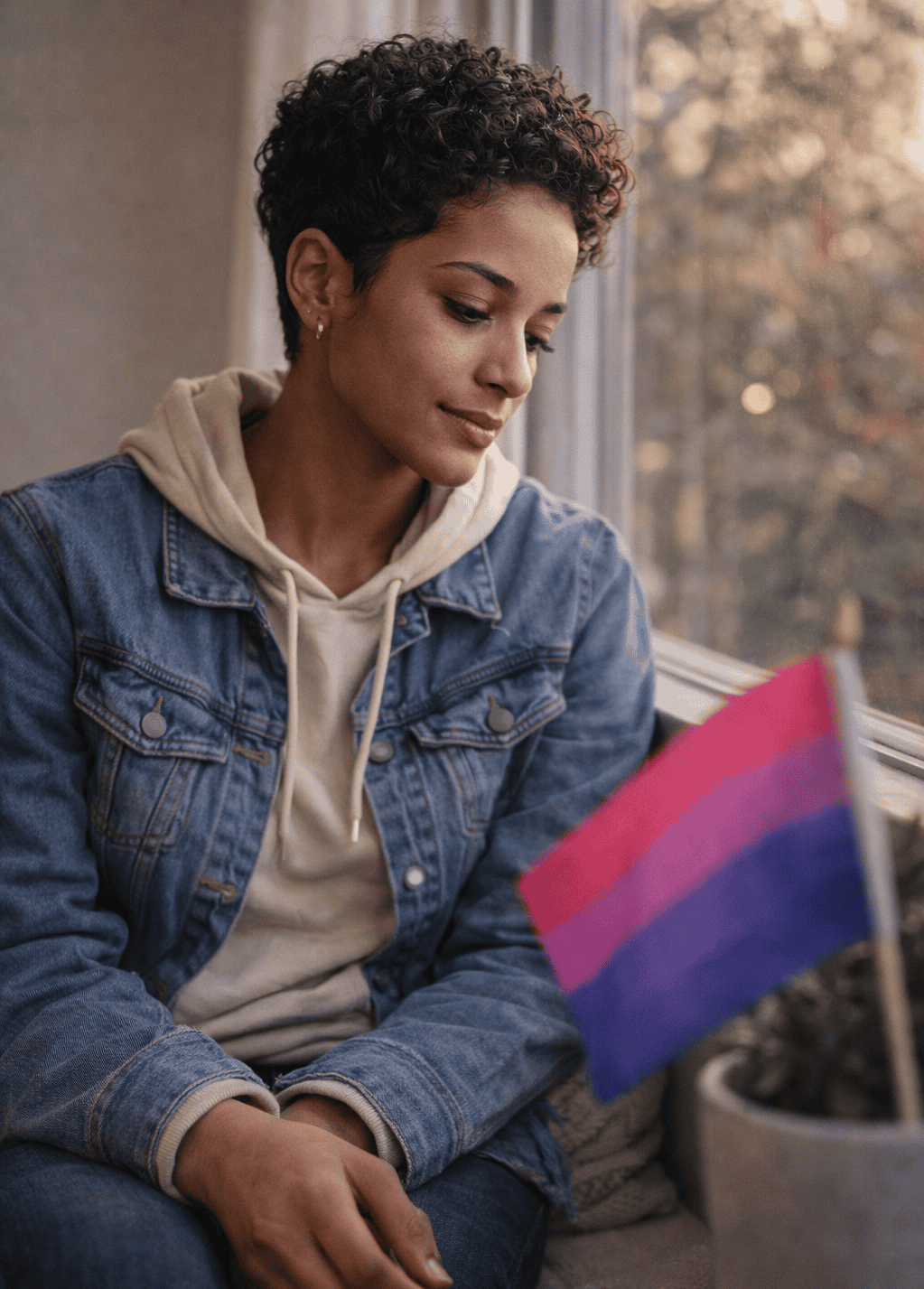
Bisexual mental health can be affected by experiences that are easy for other people to overlook. Biphobia, bisexual erasure, stereotypes, relationship assumptions, and the feeling that you do not fully belong in either straight or LGBTQ+ spaces can create real emotional pressure.
Over time, that pressure may contribute to anxiety, loneliness, shame, emotional exhaustion, low mood, or difficulty trusting other people with your identity.
These struggles do not mean bisexuality is a mental health problem. Bisexuality is not an illness, disorder, or sign of confusion. The distress often comes from stigma, rejection, isolation, unsafe relationships, and the repeated experience of being misunderstood.
If you have ever questioned whether you belong, hidden important parts of yourself, or felt tired of explaining that bisexuality is real, you are not alone.
Support does not always need to begin with a large disclosure. It may start with reading something that makes you feel recognized, adding one careful reply, speaking privately with a trusted person, or finding a mental health professional who understands bisexual experiences.
Your bisexual identity is not the problem. The pressure to hide, defend, minimize, or constantly prove it can become a problem for your mental health.
Bisexual Mental Health: The Direct Answer
Bisexual people can experience the same mental health conditions and emotional struggles as anyone else. Their wellbeing may also be affected by experiences that are particularly common around bisexual identity.
These may include:
- being treated as straight, gay, or lesbian depending on the current relationship;
- being told bisexuality is a phase or indecision;
- feeling unwelcome in both straight and LGBTQ+ environments;
- being sexualized or associated with cheating;
- hiding attraction from partners, relatives, friends, or colleagues;
- questioning whether you are “bi enough”;
- having limited access to bi-aware support;
- feeling pressure to choose a side or prove your identity.
These experiences can build on one another. A single dismissive comment may be manageable, while years of invisibility, secrecy, rejection, or repeated invalidation may become emotionally exhausting.
Understanding that context can help replace self-blame with a clearer question:
Is something wrong with me, or have I been carrying pressure that other people rarely notice?
Bisexuality Is Not a Mental Illness
Bisexuality is a sexual orientation. It should not be diagnosed, corrected, cured, or explained away as a symptom.
A bisexual person may experience depression, anxiety, trauma, obsessive thoughts, loneliness, or another mental health difficulty. Those experiences do not make their orientation less real.
Likewise, receiving mental health support should never depend on denying bisexuality or choosing a different label for somebody else’s comfort.
A supportive professional should help you understand your wellbeing, relationships, boundaries, fears, and coping patterns. They should not begin from the assumption that bisexuality itself requires treatment.
Why Bisexual Mental Health Is Often Overlooked
Bisexual people can become difficult to recognize in systems that divide sexuality into straight and gay.
A person in a different-gender relationship may be counted or treated as straight. Someone in a same-gender relationship may be assumed gay or lesbian. In both situations, bisexual identity disappears from view.
This invisibility affects more than language. It can shape whether someone:
- receives relevant support;
- feels represented in mental health information;
- believes LGBTQ+ services are meant for them;
- feels safe mentioning bisexuality to a therapist;
- recognizes their own experiences in community discussions;
- has people around them who understand bisexual-specific stress.
When bisexuality remains invisible, emotional struggles linked to erasure or identity pressure may also remain unnamed.
Biphobia and Bisexual Erasure Can Become Chronic Stress
Stress is not created only by major acts of rejection. Smaller experiences can accumulate.
A bisexual person may repeatedly hear:
- “You need to pick a side.”
- “You are only experimenting.”
- “You will eventually admit you are gay.”
- “You are basically straight now.”
- “Bisexual people cannot be satisfied with one person.”
- “I could never trust a bisexual partner.”
- “You do not belong here because of your relationship.”
Each comment may seem minor to the person saying it. For the person receiving the message, it may repeat a wider pattern: your identity is doubtful, inconvenient, temporary, excessive, or unwelcome.
Constantly preparing for that reaction can create vigilance. You may begin monitoring what you say, which partner you mention, how visibly queer you appear, and whether the people around you are safe.
Living in that state can be tiring even when no immediate crisis is happening.
Feeling Caught Between Straight and LGBTQ+ Spaces
Some bisexual people describe feeling as though they are standing between communities without being fully claimed by either one.
In straight environments, bisexuality may be misunderstood, sexualized, or ignored. Within LGBTQ+ spaces, a bisexual person may encounter gatekeeping, suspicion, or assumptions based on their partner.
This can lead to thoughts such as:
- “I am too queer for straight spaces.”
- “I am not queer enough for LGBTQ+ spaces.”
- “Nobody will understand my relationship.”
- “I have no right to ask for support.”
- “I should stay quiet to avoid taking up space.”
- “My identity is only valid when I am with a particular gender.”
Feeling excluded from several directions can intensify loneliness. It may also discourage someone from seeking help precisely when connection would be valuable.
Read Why Bisexual People Can Feel Lonely in LGBTQ+ Spaces for a deeper discussion of belonging and community exclusion.
Bisexual Invisibility Inside Relationships
A loving relationship does not always protect someone from bisexual erasure.
A partner may be accepting in theory while still saying things such as:
- “You chose me, so being bi no longer matters.”
- “Why do you need bisexual community when you are in a relationship?”
- “Talking about your identity makes me feel inadequate.”
- “You should identify as straight or gay now.”
- “Mentioning attraction means you want to act on it.”
The bisexual partner may begin minimizing themselves to preserve peace. They might stop using the label, avoid community, hide articles, or reassure their partner so frequently that their own emotional needs disappear.
Healthy reassurance should not require self-erasure.
A relationship can recognize bisexuality without treating it as a threat, request, or sign that something is missing.
Related guidance can be found in How to Talk to Your Partner About Being Bisexual and How to Support a Bisexual Partner Without Making Them Feel Questioned.
Bisexual Imposter Syndrome and Self-Doubt
Bisexual imposter syndrome is not a formal diagnosis. The phrase is often used to describe persistent doubts about whether someone is legitimately bisexual or belongs in bisexual and LGBTQ+ spaces.
You may question yourself because:
- your attraction is not equal across genders;
- you have only dated one gender;
- you are currently married;
- your feelings change over time;
- you have little or no same-gender experience;
- you are not publicly out;
- you do not look or behave how you think a bisexual person should;
- other people have challenged your identity.
Repeated doubt can become emotionally draining. Instead of allowing attraction to exist, you may analyse every crush, fantasy, relationship, and period of low attraction as evidence in an internal trial.
That cycle rarely produces perfect certainty. It often produces more anxiety.
You may find Feeling “Not Bi Enough”? helpful when self-doubt begins to dominate your relationship with identity.
Internalized Biphobia
Internalized biphobia can develop when negative messages about bisexuality are absorbed and turned inward.
It may sound like:
- “My feelings are probably attention-seeking.”
- “I should choose a normal life and ignore this.”
- “Nobody will trust me if I identify as bisexual.”
- “I am making things unnecessarily complicated.”
- “People like me cannot maintain relationships.”
- “I need experience before I am allowed to use the label.”
- “My bisexuality is embarrassing.”
These beliefs can feel personal even when they originated in family, media, religion, school, relationships, or community stereotypes.
Recognizing where the message came from can create distance between the stereotype and your actual values.
Try asking:
- Would I judge another bisexual person this harshly?
- Who taught me that this part of myself was unacceptable?
- Is the belief based on my behaviour or on a stereotype?
- What evidence supports a kinder interpretation?
- What would self-respect look like here?
Anxiety and Overanalyzing Attraction
Questioning sexuality can involve healthy reflection. It can also become overwhelming when every thought or body response is examined repeatedly.
You may begin checking:
- whether you felt enough attraction;
- which gender you noticed first;
- what a fantasy proves;
- whether a quiet period means your identity changed;
- how your reactions compare with other bisexual people;
- whether you chose the technically perfect label.
Reflection becomes less useful when it no longer produces understanding and mainly produces panic, repetitive checking, or an urgent need for certainty.
Possible ways to interrupt that pattern include:
- taking a break from quizzes and comparison;
- noticing broad patterns rather than analysing individual moments;
- accepting “I do not know yet” as a complete temporary answer;
- limiting repeated reassurance seeking;
- writing thoughts down once instead of reviewing them constantly;
- speaking with a qualified mental health professional when anxiety is affecting daily life.
A therapist should not choose your orientation. They can still help you work with anxiety, shame, intrusive thoughts, uncertainty, or compulsive self-analysis.
Loneliness, Isolation, and Hiding
Keeping bisexuality private can be the safest or most appropriate choice in some situations. Privacy itself is not unhealthy.
Emotional strain may develop when privacy turns into complete isolation and there is no place where you can speak honestly.
You might feel lonely because:
- your partner does not understand;
- family members are unsafe or dismissive;
- friends assume you are straight or gay;
- local LGBTQ+ spaces do not feel welcoming;
- you fear being recognized online;
- you are questioning later in life;
- you have nobody with a similar experience.
Connection does not always require public coming out. One confidential conversation, a moderated community, a therapist, an anonymous account, or a trusted friend may reduce the burden of carrying everything alone.
When you prefer to begin quietly, read I’m Not Ready to Post. Do I Still Belong?
Depression, Low Mood, and Emotional Exhaustion
Periods of sadness do not always mean someone has depression. Persistent low mood, loss of interest, hopelessness, severe fatigue, withdrawal, or difficulty functioning deserve attention.
Identity pressure may be one part of the picture. Other factors can include relationships, work, housing, trauma, physical health, finances, grief, isolation, sleep, or an underlying mental health condition.
Avoid assuming every emotional struggle is caused by bisexuality. Likewise, do not ignore the effect of biphobia or identity-related stress when those experiences are clearly relevant.
Professional assessment can help when symptoms persist, become intense, or interfere with daily life.
Later-in-Life Bisexuality and Grief
Recognizing bisexuality later in life can bring relief and grief at the same time.
You may feel grateful that your past finally makes sense while also mourning:
- experiences you never had;
- years spent hiding or misunderstanding yourself;
- relationships shaped by incomplete self-knowledge;
- a younger version of yourself who lacked language or support;
- communities you did not know were available;
- the possibility of being misunderstood by a spouse or family.
Grief does not automatically mean you should leave a relationship or pursue experiences immediately.
Sometimes grief needs recognition rather than action. It may help to name what was lost, what is still possible, and what self-acceptance can look like in the life you have now.
For relationship-focused guidance, read I’m Married and Think I Might Be Bisexual. What Do I Do?
Coming Out, Privacy, and Mental Health
Coming out can reduce the burden of hiding for some people. For others, disclosure may create practical danger, conflict, financial dependence, housing problems, rejection, or workplace risk.
There is no universal mental health rule saying that everyone must come out.
A more useful question is:
Would telling this person create enough safety, honesty, or support to justify the emotional and practical risks?
Selective disclosure may be the healthiest option. You might tell a partner, therapist, trusted friend, or anonymous community while remaining private elsewhere.
Choosing privacy does not mean you are ashamed. Publicly coming out also does not guarantee acceptance or emotional relief.
Read Do I Have to Come Out as Bisexual? before treating disclosure as an obligation.
Identity Stress Can Intersect With Other Pressures
No bisexual person experiences identity in isolation from the rest of their life.
Mental health may also be influenced by:
- race or ethnicity;
- gender identity;
- disability or chronic illness;
- age;
- religion or cultural expectations;
- income and housing security;
- migration or legal status;
- family responsibilities;
- relationship safety;
- access to affirming care.
A bisexual person may therefore need support that understands more than sexuality alone.
For example, advice to “just come out” may be unrealistic for someone whose housing, safety, employment, or family contact could be placed at risk.
Good support should respond to the whole situation rather than reducing every difficulty to identity.
Signs That Additional Mental Health Support May Help
You do not need to wait for a crisis before seeking professional support.
Consider speaking with a qualified mental health professional when you notice:
- persistent sadness, anxiety, hopelessness, or irritability;
- loss of interest in activities that usually matter to you;
- difficulty sleeping or sleeping much more than usual;
- withdrawal from relationships and daily responsibilities;
- repeated panic or obsessive analysis of your identity;
- shame that makes everyday life difficult;
- increased use of alcohol or drugs to cope;
- difficulty eating or caring for yourself;
- feeling unsafe in a relationship or at home;
- thoughts about harming yourself or not wanting to live.
These signs can have many causes. An assessment can help you understand what kind of support is appropriate.
What to Do During an Immediate Mental Health Crisis
Online articles, forums, and chatrooms cannot provide emergency care.
If you believe you may harm yourself or another person, cannot remain safe, or are in immediate danger:
- contact emergency services in your country;
- use a verified crisis service where you live;
- go to the nearest emergency department;
- tell a trusted person that you need immediate help;
- move away from weapons, medication, or other means of harm where possible;
- avoid remaining alone while the danger is immediate.
For LGBTQ+ young people in the United States, The Trevor Project provides crisis support and information. People outside that service area should use a verified local crisis or emergency resource.
Needing urgent help is not a personal failure. A crisis deserves immediate, real-world support.
How to Find a Bisexual-Aware Therapist
A therapist does not need to be bisexual to offer competent care. They should understand bisexuality, avoid stereotypes, and remain willing to learn.
Before beginning therapy, you may ask:
- Do you have experience supporting bisexual or bi+ clients?
- How do you approach sexual orientation and identity questions?
- Do you understand bisexual erasure and minority stress?
- Would you treat bisexuality as separate from relationship structure?
- How do you support clients who are not publicly out?
- Are you comfortable working with monogamous and non-monogamous clients without assumptions?
- How do you protect confidentiality?
The therapist’s response should leave room for your individual experience rather than forcing you into a standard bisexual narrative.
Useful signs include:
- believing your description of your identity;
- asking respectful questions;
- understanding that attraction and behaviour are different;
- not assuming that bisexuality causes relationship problems;
- respecting privacy and safety;
- helping you identify goals beyond simply changing a label.
Red Flags in Mental Health Support
A professional relationship may not be suitable when the therapist repeatedly:
- suggests bisexuality is only confusion;
- assumes you are secretly gay or straight;
- treats your current partner as proof of orientation;
- pushes you to experiment in order to know;
- pressures you to come out without considering safety;
- assumes bisexuality means non-monogamy;
- focuses on orientation when you requested help with another problem;
- dismisses biphobia or erasure as insignificant;
- uses religion, morality, or personal beliefs to shame you;
- tries to change or suppress your orientation.
One clumsy phrase may be repairable when the professional listens and corrects it. A continuing pattern of disbelief or shame is more concerning.
You are allowed to ask questions, request a different approach, or seek another professional when the care does not feel respectful or safe.
Community Support Can Help Without Replacing Therapy
Community can provide recognition that formal care does not always offer.
Hearing another bisexual person describe a familiar experience may reduce isolation and give you language for something you could not previously explain.
Supportive community may offer:
- lived experience;
- emotional recognition;
- practical suggestions;
- friendship and belonging;
- information about identity and relationships;
- examples of different bisexual lives;
- a place to ask questions without beginning from zero.
Community members cannot diagnose conditions, guarantee safety, or replace qualified treatment. Advice from peers may also be incomplete or influenced by their own experiences.
The strongest support system may combine several sources: professional care, trusted relationships, community, practical stability, and personal coping strategies.
For a focused peer discussion about isolation, self-doubt, belonging, boundaries, and what has actually helped, read or reply to What Has Helped Your Mental Health When Being Bisexual Felt Isolating? in the BiFiles Forum. You can read without an account and create a free account when you want to reply. The discussion is for lived experience and peer support, not emergency or professional mental health care.
Start Quietly When Participation Feels Overwhelming
You do not need to share your full story before receiving value from a community.
A lower-pressure beginning could involve:
- reading FAQ answers;
- browsing older forum discussions;
- saving articles that feel relevant;
- reading personal stories;
- observing how a community handles vulnerable posts;
- adding one general reply without identifying details;
- joining a chat only when you feel ready.
Quiet participation still counts. You do not owe strangers intimate information in exchange for belonging.
Visit BiFiles Support & FAQ for short answers or explore Community Stories when recognition feels more useful than direct conversation.
Boundaries Are Part of Mental Health Care
Protecting your wellbeing may require limits around people, conversations, and online spaces.
Reasonable boundaries can include:
- ending debates about whether bisexuality exists;
- refusing invasive questions about sexual history;
- leaving groups that repeatedly sexualize members;
- not discussing identity with unsafe relatives;
- blocking unwanted private messages;
- asking a partner not to disclose your identity;
- taking breaks from conflict-heavy social media;
- choosing not to correct every false assumption.
A boundary is not always a demand that another person change. It may describe what you will discuss, where you will participate, and when you will step away.
You do not need to educate everyone at the expense of your own peace.
Self-Care Beyond Generic Advice
Self-care cannot remove discrimination, repair an unsafe relationship, or replace treatment. It can still help your nervous system and daily functioning while larger problems are addressed.
Useful forms of care may include:
- Rest: reducing demands when emotional exhaustion is high.
- Routine: creating predictable sleep, meals, movement, and daily structure.
- Writing: recording thoughts without needing to publish them.
- Connection: contacting somebody who feels safe and steady.
- Movement: using walking, exercise, stretching, or time outdoors to reduce tension.
- Creative expression: making music, art, stories, or other work that helps process emotion.
- Media boundaries: limiting content that repeatedly triggers shame or conflict.
- Practical action: addressing housing, finances, relationship safety, or access to care where those pressures are central.
The right coping strategy depends on what is causing the distress.
Breathing exercises may help during acute anxiety. They will not solve discrimination, financial insecurity, abuse, or a harmful environment. Match the response to the real problem whenever possible.
How Partners, Friends, and Family Can Help
Support from another person does not require perfect knowledge.
Helpful actions include:
- believing the identity someone shares;
- listening without immediately making the conversation about your fear;
- not treating bisexuality as evidence of cheating;
- respecting privacy and coming-out choices;
- avoiding jokes about confusion or “twice the options”;
- learning independently;
- asking what support would actually help;
- encouraging professional care when distress becomes serious;
- remaining present without trying to solve everything.
A simple response can be powerful:
I believe you. You do not have to explain everything right now. Tell me what would help you feel supported.
For partner-focused guidance, read My Partner Came Out as Bisexual. What Now?
A Practical Bisexual Mental Health Checklist
These steps may help you identify the next form of support:
- Name the main source of distress rather than blaming yourself.
- Separate bisexuality from stereotypes about bisexuality.
- Notice whether isolation is making the problem heavier.
- Identify at least one safer person, space, or professional.
- Protect privacy where disclosure could create harm.
- Set limits around repeated invalidation.
- Reduce compulsive checking, comparison, and reassurance seeking.
- Seek professional help when symptoms persist or affect daily functioning.
- Use emergency support when immediate safety is at risk.
- Allow self-understanding to develop without a deadline.
You do not need to complete every step immediately. The most useful next action may be small, private, and practical.
Bisexuality and Mental Health: Final Answer
Bisexuality is not a mental illness. Mental health strain may develop when a bisexual person experiences erasure, biphobia, isolation, unsafe disclosure, relationship pressure, community exclusion, or repeated doubts about whether they belong.
Those pressures can contribute to anxiety, shame, loneliness, emotional exhaustion, low mood, and difficulty asking for help.
Support may involve a bi-aware therapist, a trusted person, clear boundaries, safer community, practical stability, or simply having one place where your identity is not questioned.
Community support can reduce isolation but cannot replace emergency care or qualified mental health treatment.
You do not need to be fully out, completely certain, visibly queer, or experienced with several genders before your wellbeing deserves attention.
You deserve support that helps you feel safer and more whole—not support that asks you to become less bisexual first.
Explore More on BiFiles
These BiFiles resources can help with identity, loneliness, self-doubt, relationships, privacy, and community support.
- Feeling “Not Bi Enough”? Why So Many Bisexual People Struggle With This
- Why Bisexual People Can Feel Lonely in LGBTQ+ Spaces
- Am I Bisexual? Signs, Questions & What It Really Feels Like
- Bisexuality Beyond Labels
- I’m Not Ready to Post. Do I Still Belong?
- Do I Have to Come Out as Bisexual?
- How to Support a Bisexual Partner Without Making Them Feel Questioned
You can also explore the wider BiFiles Network at your own pace:
- Visit BiFiles Support & FAQ
- Read More BiFiles Articles
- Browse Community Stories
- Browse the BiFiles Forum
- Open BiFiles Chat
For additional official information, read the CDC overview of LGBTQ+ youth health disparities. LGBTQ+ young people in the United States can also access information and crisis support through The Trevor Project.