Why Bisexual Visibility Matters
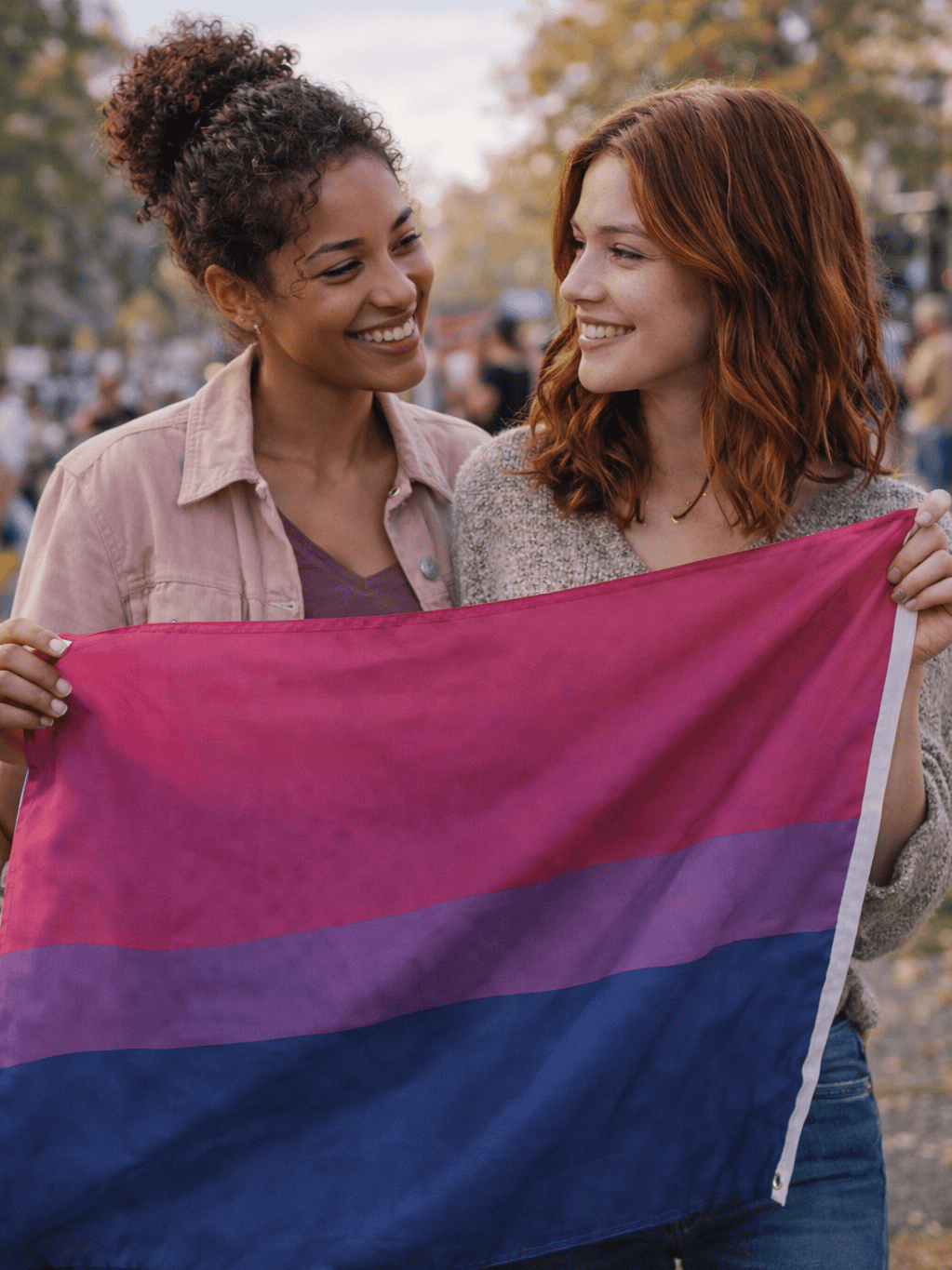
Bisexual visibility matters because bisexual people are often present without being recognized. A person may be openly bisexual and still be described as straight, gay, or lesbian depending on their current partner. Others remain invisible because they do not feel safe coming out, have limited relationship experience, or rarely see lives like theirs represented.
That invisibility is not merely a problem of terminology. It can affect belonging, relationships, mental wellbeing, access to community, and whether somebody believes their own experiences are valid.
Visibility helps challenge the idea that bisexuality is temporary, indecisive, unfaithful, attention-seeking, or only relevant when somebody dates several genders.
At the same time, visibility should never become an obligation to disclose. A bisexual person can value greater representation while choosing privacy in their own life.
This guide explores bisexual visibility, erasure, relationship assumptions, common myths, mental health, community, media, family life, workplace visibility, privacy, and practical ways individuals and allies can create better recognition.
You may also find Navigating Bisexuality in a Straight-or-Gay World, Why Bisexual People Can Feel Lonely in LGBTQ+ Spaces, and Do I Have to Come Out as Bisexual? helpful.
Bisexual visibility is not about forcing every bisexual person into public view. It is about creating a world where being seen does not require constant explanation.
Why Bisexual Visibility Matters: The Direct Answer
Bisexual visibility matters because it helps people recognize that bisexuality is a complete and varied sexual orientation.
Greater visibility can:
- help questioning people find language for their feelings;
- challenge myths about confusion, cheating, and indecision;
- reduce relationship-based bisexual erasure;
- make LGBTQ+ communities more inclusive;
- show that bisexual lives take many different forms;
- help partners, relatives, and professionals offer better support;
- reduce the isolation of feeling like the only bisexual person present;
- create more accurate conversations about bisexual mental health and relationships.
Visibility does not require every bisexual person to be publicly out. Representation, inclusive language, community resources, respectful partners, and accurate information can all increase visibility without exposing individuals who need privacy.
What Does Bisexual Visibility Mean?
Bisexual visibility means recognizing bisexual people, experiences, relationships, history, and concerns as distinct and real.
It can appear through:
- people using bisexual openly as an identity;
- accurate bisexual characters and stories;
- bi-specific articles, research, and support;
- LGBTQ+ spaces discussing bisexual experiences directly;
- partners acknowledging rather than erasing orientation;
- workplaces and schools including bisexuality in their language;
- community events welcoming people regardless of their current relationship;
- bisexual people seeing different versions of adult and family life represented.
Visibility is not simply the number of people who publicly use a label. It also concerns whether bisexuality is understood accurately when it becomes visible.
A bisexual person who is seen only as a stereotype is technically visible but not meaningfully represented.
Being noticed is not the same as being understood.
Bisexual Visibility Is Not the Same as Coming Out
Visibility and personal disclosure are connected, but they are not identical.
Coming out means sharing information about your own identity. Bisexual visibility is a wider cultural and community issue.
A person may support bisexual visibility while choosing not to come out because of:
- family rejection;
- workplace discrimination;
- religious or cultural pressure;
- housing or financial dependence;
- relationship safety;
- privacy preferences;
- custody or parenting concerns;
- fear of harassment;
- not feeling ready.
Nobody should be treated as responsible for improving representation at the cost of their own safety.
You can value a more visible bisexual community without becoming its public representative.
Read Do I Have to Come Out as Bisexual? when deciding whether personal disclosure is helpful or safe.
Why Bisexuality Is So Easily Erased
Relationships are visible in ways that orientation often is not.
When people see a man and a woman together, they usually assume heterosexuality. When they see two men or two women together, they may assume both partners are gay or lesbian.
This reduces orientation to the gender of one current partner.
Bisexuality may also become invisible because:
- people expect attraction to point in only one direction;
- bisexual people do not always feel safe disclosing;
- someone has dated only one gender;
- bisexuality is grouped into broader LGBTQ+ language without being named;
- media relabels bisexual characters as straight, gay, or confused;
- people assume monogamy ends bisexual identity;
- later-in-life bisexuality is overlooked;
- bisexual men and women face different stereotypes that obscure their identity.
Erasure does not always involve somebody denying bisexuality directly. It can happen whenever bisexuality is replaced by an easier assumption.
Relationship Status Does Not Determine Sexual Orientation
A bisexual person does not become straight, gay, or lesbian whenever their relationship changes.
A relationship identifies one partner. Orientation describes a wider pattern of attraction.
This distinction matters for people who are:
- married to a different-gender partner;
- in a same-gender relationship;
- single;
- celibate;
- monogamous;
- divorced or widowed;
- dating for the first time;
- not interested in relationships.
None of those circumstances automatically proves or disproves bisexuality.
Your relationship can describe who you are with. It cannot fully describe everyone you are capable of being attracted to.
Bisexual Visibility in Different-Gender Relationships
Bisexual people in different-gender relationships are commonly assumed straight.
They may hear:
- “You chose a side.”
- “You are basically straight now.”
- “Bisexuality was only a phase.”
- “Why does your orientation matter if you are married?”
- “You have a normal relationship now.”
A relationship that other people read as heterosexual may offer situational safety. It can also make bisexual identity socially invisible.
The person may feel unable to discuss LGBTQ+ experiences without explaining why they belong. Their partner may also interpret bisexual visibility as dissatisfaction with the relationship.
Recognition does not require minimizing the relationship. A bisexual person can deeply love a different-gender partner while wanting their orientation acknowledged accurately.
Bisexual Visibility in Same-Gender Relationships
Bisexual people can also be erased in same-gender relationships.
Others may assume that the person has finally come out as gay or lesbian. Bisexuality is then treated as an earlier stage rather than a continuing identity.
Correcting the assumption may feel difficult because the bisexual partner does not want to:
- make the current partner feel less valued;
- appear uncomfortable with being seen as queer;
- trigger fears about attraction to another gender;
- lose acceptance in gay or lesbian spaces;
- restart debates about whether bisexuality is real.
Acknowledging bisexuality does not weaken a same-gender relationship. It allows the individual to use the orientation that fits them.
Visibility Challenges the “Just a Phase” Myth
Bisexuality is frequently described as a temporary period before someone chooses straight, gay, or lesbian.
Visible bisexual adults challenge that narrative simply by living varied lives over time.
Bisexual people may remain bisexual while:
- building long-term relationships;
- marrying;
- raising children;
- remaining single;
- changing partners;
- growing older;
- choosing monogamy;
- participating in LGBTQ+ community;
- living privately.
A person may change labels later, but the possibility of change does not make bisexuality inherently temporary.
People of many orientations update their language as self-understanding develops.
Visibility Challenges the Cheating Stereotype
Another harmful myth is that bisexual people are more likely to cheat because they can be attracted to more than one gender.
This confuses the range of possible attraction with the choices somebody makes.
Faithfulness depends on:
- values;
- honesty;
- self-control;
- respect for relationship agreements;
- communication;
- individual behaviour.
People of every orientation can experience attraction outside a relationship. Orientation does not make anyone automatically loyal or unfaithful.
Visible bisexual people in stable, ordinary relationships help challenge the idea that bisexuality and commitment are incompatible.
Read Can You Be Bisexual and Monogamous? for a complete guide.
Visibility Does Not Mean Bisexuality Looks One Way
Greater bisexual visibility should reveal diversity rather than replace one stereotype with another.
Bisexual people may experience:
- equal or unequal attraction;
- stable or changing attraction;
- romantic and sexual attraction that differ;
- a strong gender preference;
- limited relationship experience;
- attraction connected to emotional safety;
- overlapping bisexual, queer, pansexual, asexual, or demisexual identities;
- no interest in public labels.
No single visible person can represent every bisexual experience.
Healthy visibility makes room for differences without asking which version is the most authentic.
Bisexual Men Need Visibility
Bisexual men are often relabeled as gay, treated as dishonest, or considered less masculine.
Some avoid coming out because they expect potential partners to reject them or assume that attraction to men reveals their “real” identity.
Greater visibility can show that bisexual men may be:
- single or partnered;
- married to people of different genders;
- monogamous or non-monogamous;
- masculine, feminine, or neither;
- open or private;
- experienced or inexperienced;
- confident or still questioning.
A bisexual man should not have to identify as straight or gay to become understandable to other people.
Bisexual Women Need More Than Sexualized Visibility
Bisexual women may appear highly visible in popular culture while still being poorly understood.
Visibility becomes harmful when bisexual women are shown mainly as:
- available for male fantasy;
- interested in threesomes;
- unfaithful;
- experimenting temporarily;
- using attraction to women for attention;
- less serious about relationships with women.
Sexualized attention is not the same as respectful representation.
Bisexual women need space to be visible as complete people with ordinary relationships, boundaries, ambitions, families, and different forms of attraction.
Non-Binary and Trans Bisexual People Must Be Included
Bisexuality is sometimes incorrectly described as attraction only to men and women.
Many bisexual people understand the identity as attraction to more than one gender or to their own gender and genders different from their own.
Non-binary and trans bisexual people may face:
- incorrect definitions that exclude their gender;
- pressure to choose another sexuality label;
- anti-trans attitudes inside LGBTQ+ spaces;
- the assumption that bisexuality cannot include non-binary attraction;
- erasure of both gender and orientation;
- questions about whether partners “count.”
Bisexual visibility should not depend on a binary view of gender.
Later-in-Life Bisexual Visibility Matters
Bisexual stories often focus on young people discovering identity for the first time.
People also recognize bisexuality in their thirties, forties, fifties, sixties, and later.
Later-in-life bisexual people may already be:
- married;
- parents or grandparents;
- established in a career;
- part of a religious community;
- recovering from divorce or loss;
- using a different identity label;
- living in environments where disclosure has real consequences.
Visible stories from older bisexual people help challenge the idea that self-discovery belongs only to youth.
Read Coming Out as Bisexual Later in Life: You Are Not Too Late for more guidance.
Bisexual Parents and Families Need Recognition
Bisexual parents can become particularly invisible when their family is read as heterosexual.
A mother and father raising children may both be assumed straight, even when one or both parents are bisexual.
That parent may struggle to find community that understands:
- identity within a committed marriage;
- disclosure to children;
- school and extended-family privacy;
- straight-passing family life;
- remaining connected to LGBTQ+ community;
- later-in-life recognition;
- the difference between bisexual identity and relationship change.
Bisexual visibility should include ordinary family life rather than presenting bisexuality only through dating or sexual exploration.
Read Parenting While Bi: Feeling Invisible in a Straight-Passing Family.
The Mental Health Impact of Bisexual Erasure
When an identity is repeatedly ignored, questioned, or misrepresented, the person may begin questioning themselves.
Bisexual erasure can contribute to:
- loneliness;
- identity self-doubt;
- anxiety about disclosure;
- shame;
- the feeling of being “not bi enough”;
- difficulty asking for support;
- self-silencing in relationships;
- exhaustion from repeated explanation;
- disconnection from LGBTQ+ community.
These experiences do not mean bisexuality is a mental health problem.
Distress may develop from stigma, isolation, rejection, and the lack of environments where the identity is believed.
Seeing other bisexual people can offer recognition: somebody else has experienced this, and the problem is not simply personal failure.
Read Bisexual Mental Health: Why Being Bi Can Feel So Isolating for a broader discussion of erasure, anxiety, boundaries, and support.
Visibility Helps Questioning People Recognize Themselves
Many people delay recognizing bisexuality because available examples do not resemble their lives.
They may believe bisexuality requires:
- equal attraction;
- relationships with several genders;
- certainty from a young age;
- a particular appearance;
- being publicly out;
- non-monogamy;
- visible participation in LGBTQ+ culture;
- never having used another label.
Diverse bisexual stories show that none of those conditions is universal.
Someone may recognize themselves in a married bisexual parent, an older bi man, a monogamous bi woman, a questioning teenager, or a person whose attraction changes over time.
Visibility gives people more than a definition. It provides examples of how identity can exist in real life.
Visibility Can Reduce Bisexual Imposter Syndrome
Bisexual people often wonder whether their experience is substantial enough to count.
Doubt may focus on:
- limited same-gender experience;
- a strong gender preference;
- a different-gender relationship;
- changing attraction;
- not being publicly out;
- recognizing bisexuality later;
- not feeling connected to LGBTQ+ culture.
When only one narrow version of bisexuality is visible, people outside that version may feel fraudulent.
Broader representation demonstrates that variation is part of bisexual experience rather than evidence against it.
Read Feeling “Not Bi Enough”? when self-doubt becomes difficult to escape.
Bisexual Visibility Inside LGBTQ+ Spaces
The “B” may appear in LGBTQ+, but bisexual people do not always feel recognized once they enter community spaces.
They may encounter:
- relationship-based gatekeeping;
- doubt about limited experience;
- claims that bisexual people can choose straight privilege;
- pressure to identify as gay or lesbian;
- hostility toward different-gender partners;
- sexual stereotypes;
- little bi-specific programming or discussion;
- moderators who treat biphobia as harmless debate.
Visibility inside LGBTQ+ spaces means bisexual people are not merely listed in the acronym but included in the culture, examples, leadership, resources, and moderation.
For a deeper discussion, read Why Bisexual People Can Feel Lonely in LGBTQ+ Spaces.
Bi-Specific Spaces Still Matter
Broad LGBTQ+ solidarity is valuable. Bi-specific spaces can address experiences that are easily lost in larger discussions.
These may include:
- being erased by a current relationship;
- feeling between straight and queer communities;
- changing attraction;
- coming out more than once;
- being treated as unfaithful;
- later-in-life recognition;
- mixed-orientation assumptions;
- different forms of bisexual self-doubt.
A bi-focused community does not need to replace other LGBTQ+ spaces. It can provide an additional layer of recognition.
BiFiles offers articles, stories, forum discussions, chat, reviews, and support resources through the BiFiles online community.
Representation in Media Matters
Books, television, films, games, podcasts, and online media influence which lives people consider possible.
Bisexual representation can help when it shows people who are:
- more than a plot twist;
- capable of commitment;
- not defined only by sex;
- still bisexual in a long-term relationship;
- allowed to name their identity clearly;
- different in age, gender, culture, race, and family structure;
- living ordinary as well as dramatic lives.
Poor representation can reinforce the same myths visibility is supposed to challenge.
The next BiFiles article, Bisexual Representation in Media: What Needs to Change, examines those patterns in greater detail.
Visibility at Work
Bisexual people may become invisible at work because colleagues assume orientation from a spouse or partner.
A person may avoid correcting the assumption because disclosure could affect:
- professional relationships;
- job security;
- promotion opportunities;
- workplace gossip;
- religious or cultural tensions;
- personal safety;
- privacy outside work.
Inclusive workplaces should not require employees to come out before bisexuality is recognized.
Better workplace visibility can include:
- naming bisexuality in policies and training;
- not assuming partner gender determines orientation;
- including bi-specific examples;
- respecting confidentiality;
- challenging biphobic jokes;
- supporting employee groups without pressuring participation.
An employee can appreciate inclusive policies while remaining personally private.
Visibility in Schools and Education
Education often presents sexuality as straight or gay, leaving bisexuality unexplained.
Young people may then assume:
- different-gender attraction proves they are straight;
- same-gender attraction means they must be gay or lesbian;
- changing feelings are evidence of confusion;
- bisexuality requires equal attraction;
- they must date several genders before using the label.
Age-appropriate bisexual inclusion can help students understand that sexual orientation is not always binary.
This does not mean telling young people which label to use. It means ensuring bisexuality is available as one legitimate possibility.
Visibility in Healthcare and Mental Health Support
Healthcare professionals may assume orientation based on a patient’s current partner.
This can affect conversations about:
- sexual health;
- mental wellbeing;
- relationships;
- family planning;
- identity-related stress;
- past experiences;
- access to relevant support.
A bisexual patient should not have to correct a professional repeatedly before receiving appropriate care.
Professionals can improve visibility by asking open questions instead of assuming:
Are there current or previous partners, attractions, identities, or relationship circumstances that are relevant to the care you need?
Bisexual Visibility and Pride
Pride can offer recognition, celebration, protest, community, or simply a chance to feel less alone.
Bisexual people may still wonder whether they belong at Pride when they:
- attend with a different-gender partner;
- are not publicly out;
- have limited same-gender experience;
- do not feel visibly queer;
- recognized bisexuality later;
- are attending for the first time.
Bisexuality is part of LGBTQ+ history and community. A person does not need to present a qualifying relationship before participating.
Attending Pride is also optional. Not participating does not make someone less bisexual or less supportive.
Quiet Bisexual Visibility Is Still Visibility
Visibility is often imagined as a public announcement, social media post, flag, or Pride event.
It can also be quieter.
Quiet visibility may include:
- using bisexual privately with a partner;
- telling one trusted friend;
- reading bisexual stories;
- correcting one assumption;
- joining an anonymous community;
- displaying a small symbol;
- supporting bisexual creators;
- including bisexuality in a conversation without disclosing personally;
- refusing to laugh at a biphobic joke.
Small acts can create recognition without requiring complete public openness.
For a focused discussion about the balance between being visible and protecting your privacy, read or reply to When Does Bisexual Visibility Feel Helpful—and When Does Privacy Matter More? in the BiFiles Forum. You can read without an account and create a free account when you want to reply.
Visibility Should Not Become a Performance
Bisexual people may feel pressure to make their identity visible enough for others to believe it.
They may believe they need to:
- date several genders;
- discuss attraction publicly;
- attend LGBTQ+ events;
- display bisexual symbols;
- correct every assumption;
- share personal history;
- make sexuality central to their public identity.
Visibility should create freedom rather than another test.
You are not less bisexual when your life does not make the identity immediately obvious to strangers.
You do not need to perform bisexuality before you deserve recognition.
When Visibility Is Not Safe
Visibility can carry different risks depending on country, family, culture, religion, work, housing, and legal circumstances.
Before disclosing, consider whether it could affect:
- physical safety;
- housing;
- income;
- immigration or legal circumstances;
- custody;
- family support;
- education;
- religious community;
- access to healthcare;
- online privacy.
Remaining private in an unsafe environment is not a failure of courage.
Community organizations and visible allies should work to make disclosure safer rather than criticizing individuals who cannot take the risk.
Do Not Out Bisexual People Without Permission
Supporting visibility does not give anyone permission to reveal another person’s orientation.
Outing can affect:
- relationships;
- employment;
- housing;
- family contact;
- religious community;
- personal safety;
- mental health;
- trust.
Ask before mentioning somebody’s bisexuality to friends, relatives, colleagues, online audiences, or community members.
I want to respect your privacy. Who knows, and where are you comfortable with me mentioning your bisexuality?
Visibility must remain connected to consent.
How Partners Can Support Bisexual Visibility
A partner can acknowledge bisexuality without treating it as a threat.
Supportive actions include:
- using the identity their partner prefers;
- not saying the relationship makes bisexuality irrelevant;
- respecting privacy boundaries;
- allowing bi-specific community involvement;
- challenging stereotypes from family and friends;
- not turning visibility into a discussion about threesomes;
- separating identity from relationship agreements;
- asking what recognition feels helpful.
A supportive partner might say:
I understand that being with me does not erase your bisexuality. Tell me when you want me to acknowledge it and when you want privacy.
Read How to Support a Bisexual Partner Without Making Them Feel Questioned.
How Friends and Family Can Help
Friends and relatives do not need expert knowledge to avoid bisexual erasure.
They can:
- believe the identity someone shares;
- avoid assigning orientation from a partner;
- not ask for sexual evidence;
- respect confidentiality;
- challenge jokes about confusion or cheating;
- learn independently;
- include bisexuality in LGBTQ+ conversations;
- accept that labels may change;
- avoid treating disclosure as a relationship crisis.
A simple response can have a lasting effect:
Thank you for trusting me. I believe you, and you do not need to prove it.
What LGBTQ+ Communities Can Do
Community inclusion should extend beyond placing the letter B in a title.
Helpful practices include:
- creating bi-specific discussions and resources;
- including bisexual people in leadership;
- welcoming different-gender partners respectfully;
- challenging gatekeeping;
- moderating identity invalidation;
- protecting members from sexual solicitation;
- including bisexual men, women, trans, and non-binary people;
- recognizing parents and older bisexual adults;
- allowing quiet participation;
- listening when recurring problems are identified.
Healthy visibility allows bisexual people to participate without becoming permanent educators or representatives of the entire community.
How Organizations and Professionals Can Improve Visibility
Organizations can unintentionally erase bisexuality through language that divides everyone into straight and gay.
Improvements may include:
- naming bisexuality directly;
- using examples involving different relationship configurations;
- not assuming identity from partner gender;
- collecting data that allows bisexual people to identify accurately;
- including bi-specific mental health and relationship information;
- training staff about erasure and stereotypes;
- respecting confidentiality;
- consulting bisexual people when designing services.
Visibility becomes meaningful when it changes how people are treated, not merely how an organization describes itself.
Practical Ways to Support Bisexual Visibility
You do not need a large platform to make bisexuality more visible.
Possible actions include:
- sharing accurate bisexual resources;
- supporting bisexual writers and creators;
- using bisexual rather than only broad umbrella language when relevant;
- challenging the “phase” and cheating myths;
- correcting relationship-based assumptions;
- including bi people in LGBTQ+ events and discussions;
- protecting the privacy of people who are not out;
- listening to experiences different from your own;
- creating moderated spaces where support is separated from dating;
- making room for quiet readers and questioning people.
The goal is not to make bisexuality constantly visible in every conversation. It is to prevent the identity from disappearing whenever it becomes inconvenient or difficult to categorize.
Questions to Ask About Visibility
These questions can help individuals and communities evaluate whether bisexuality is genuinely recognized:
- Do we assume orientation from a current partner?
- Are bisexual experiences named directly?
- Is bisexuality shown outside dating and sexual contexts?
- Do people feel safe discussing different-gender relationships?
- Are bisexual men believed?
- Are bisexual women represented without fetishization?
- Are trans and non-binary bisexual people included?
- Can people remain private without being judged?
- Does moderation address biphobia?
- Are older people and parents visible?
- Does representation show several different bisexual lives?
- Are individuals asked for consent before being identified publicly?
No person or community will answer every question perfectly. The willingness to listen, correct assumptions, and improve still matters.
Why Bisexual Visibility Matters: Final Answer
Bisexual visibility matters because bisexual people are often erased by relationship assumptions, stereotypes, narrow definitions, and the expectation that sexuality must be either straight or gay.
Accurate visibility challenges myths about confusion, cheating, phases, monogamy, gender preference, and the need to prove identity through experience.
It helps questioning people recognize themselves, reduces isolation, strengthens community belonging, and creates better support in relationships, healthcare, education, workplaces, and LGBTQ+ spaces.
Visibility should include bisexual men, women, trans and non-binary people, parents, older adults, monogamous people, private people, and those whose attraction or labels change over time.
Personal disclosure must remain voluntary. Nobody should be outed or pressured to become visible when doing so could threaten safety, privacy, family, housing, or employment.
The goal is not for every bisexual person to tell everyone. It is for bisexuality to remain recognizable and respected regardless of who somebody dates or how publicly they live.
Bisexual visibility succeeds when people no longer need to choose between being understood and being safe.
Explore More on BiFiles
These BiFiles resources can help with bisexual visibility, erasure, identity, relationships, mental health, coming out, and community.
- Navigating Bisexuality in a Straight-or-Gay World
- Why Bisexual People Can Feel Lonely in LGBTQ+ Spaces
- Do I Have to Come Out as Bisexual?
- Bisexual Mental Health: Why Being Bi Can Feel So Isolating
- Feeling “Not Bi Enough”?
- Can You Be Bisexual and Monogamous?
- Parenting While Bi: Feeling Invisible in a Straight-Passing Family
- Bisexual Representation in Media: What Needs to Change
- How to Find a Supportive Bisexual Community Online
You can also explore the wider BiFiles Network at your own pace: