Gender Identity, Gender Expression and Attraction: What Shapes Who We’re Drawn To?
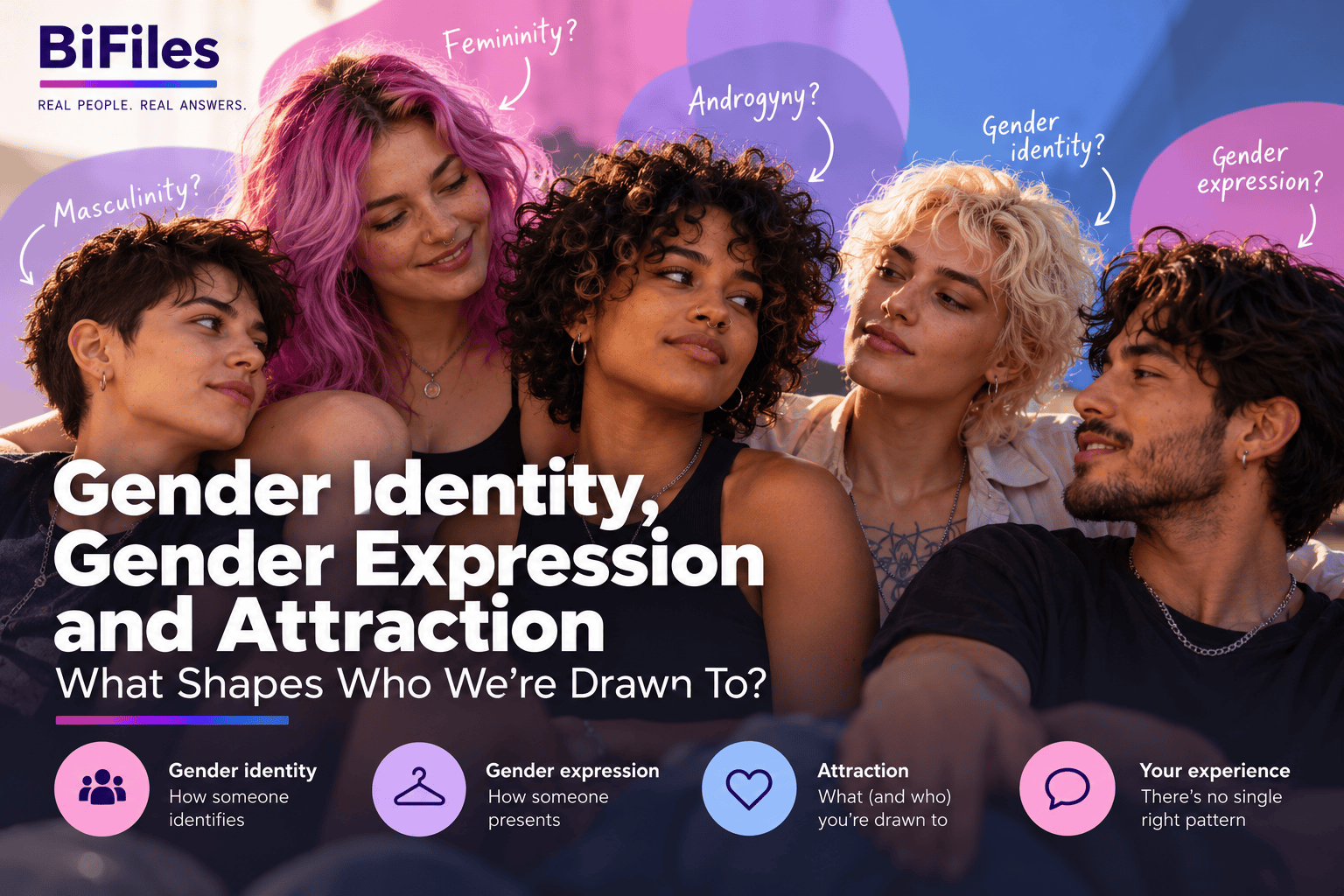
Two people can have a similar appearance and identify with different genders. Two people can share a gender identity and express themselves in very different ways. And someone can be attracted to masculinity, femininity, or androgyny without experiencing that attraction in exactly the same way across genders.
For bisexual people, these differences can raise questions: Does someone’s gender identity affect my attraction? What if I am drawn to a particular kind of gender expression? Does being attracted to androgynous people change which sexuality label fits me?
There is no universal formula. Understanding the difference between gender identity, gender expression, and attraction can help you explore your own experience without turning your preferences—or somebody else’s identity—into a rigid rule.
Gender identity and gender expression are not the same thing
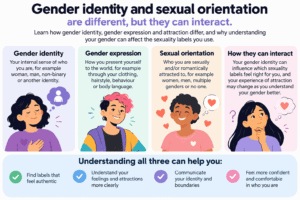
Gender identity is how someone understands their own gender. They may identify as a woman, a man, non-binary, or use other language that describes their experience.
Gender expression is how someone presents or expresses themselves, including through clothing, hair, voice, mannerisms, and style. People sometimes describe expression as masculine, feminine, androgynous, or a mixture of these. These are descriptions of presentation, not dependable ways of identifying someone’s gender.
A masculine-presenting person might be a woman, man, or non-binary person. A non-binary person might present in an androgynous way, but they might also appear masculine or feminine. Androgyny is not a requirement for being non-binary.
Sexual orientation concerns patterns of romantic or sexual attraction. It is another distinct part of a person’s experience. These concepts can interact without becoming interchangeable. For the basic distinctions, see Gender Identity vs Sexual Orientation: What’s the Difference?
Why might masculinity, femininity, or androgyny influence attraction?
People notice different things when attraction begins. For some, a masculine style, feminine presentation, or androgynous appearance is an important first impression. Others notice personality, humour, shared values, voice, emotional connection, or how someone treats them. Often these elements work together.
Having a recurring type does not mean you can know someone’s gender by looking at them. It also does not mean everyone with that appearance will be attractive to you. Gender expression may be one meaningful cue without explaining the whole connection.
For example, a bisexual person may notice that they are often attracted to feminine-presenting people of more than one gender. Another may be drawn to androgynous styles but still experience attraction to people who do not present that way. Neither pattern is a test of whether someone is bisexual enough.
Can gender identity affect attraction when someone’s appearance stays the same?
It can for some people, while for others it does not. Someone might learn that a person they already know identifies as non-binary, or that the person uses a different gender label from the one they had assumed. That new information can change how they understand a possible relationship. Another person may find that their attraction remains much the same.
Neither experience can be prescribed in advance. Attraction is not only a visual reaction, and identity can matter within someone’s understanding of romance, intimacy, and partnership. Yet it is also possible for gender identity to have little influence on a person’s immediate attraction.
These are different lived experiences, not evidence of a single biological mechanism or a rule applying to all bisexual, pansexual, straight, or gay people. Nor does a change in attraction decide whether the other person’s gender is real. Respecting someone’s identity and wanting to date them are separate questions.
Can gender expression matter more to me than gender identity?
Yes. You might notice presentation before you know anything about how a person identifies. For some people, expression is a stronger initial attraction cue than gender identity. For others, gender identity becomes important as they get to know someone, and for others both remain relevant.
One useful distinction is between what first catches your attention and what makes a relationship feel right to you. A hairstyle, voice, or style of dress may spark interest. How a person understands their gender, how you relate to each other, and what you both want from a relationship may become important later.
You can describe your preferences without dismissing someone’s stated gender or treating expression as a substitute for identity.
Does being attracted to androgynous people determine my sexuality?
No. Androgyny describes an appearance or form of expression, not a single gender. Attraction to androgynous people does not by itself tell you whether bisexual, pansexual, queer, gay, straight, or another label is the most useful description of your sexual orientation.
Consider your broader experiences rather than trying to derive a label from one preferred aesthetic. Are you attracted to people of more than one gender? Does gender have a particular role in your attraction? Do you find one label meaningful because of your experiences or connection to a community? You do not need a perfect answer to every question.
Some people use specific terms to describe an attraction pattern. Others prefer an established orientation label, multiple labels, or no label. There is no requirement to adopt a new identity simply because someone else has a technical-sounding name for your preference.
Can I be bisexual and have a particular type?
Yes. Bisexuality is commonly understood as the capacity for attraction to more than one gender. It does not require equal attraction, attraction to every gender, identical feelings across genders, or a lack of preferences.
You might prefer a particular presentation, find different qualities appealing in different people, or feel stronger attraction toward one gender at a given point in life. A type or preference does not automatically cancel a broader orientation.
This also does not create an automatic dividing line between bisexual and pansexual. Some people using either label describe gender as important to their attraction; others do not. The labels overlap and are shaped by personal meaning as well as commonly used definitions. Read Bisexual vs Pansexual: What’s the Difference—and Does It Matter? for a more detailed explanation.
What about attraction to trans or non-binary people?
A person’s trans status does not tell you what their gender expression looks like, what their body is like, or what kind of relationship they want. Trans women are women and trans men are men. Non-binary people are not all alike, and their presentations vary widely.
Feeling attracted to a trans or non-binary person does not automatically assign you a new sexuality label. Equally, someone’s attraction or lack of attraction should not be treated as a verdict on that person’s identity.
Respect matters in how attraction is communicated. You can be interested in someone’s presentation without assuming their pronouns, anatomy, sexual preferences, or availability. You can also recognise a person’s gender while deciding that you are not romantically or sexually compatible.
For a closer look at these questions, read Attracted to a Trans or Non-Binary Person: What Does It Mean for Your Sexuality?
How do I talk about my preferences without making assumptions?
You do not have to hide what draws you to someone. But it helps to keep a distinction between describing your attraction and defining their identity.
- Describe what you personally notice or enjoy rather than claiming that everyone with a certain presentation must share an identity.
- Use the names and pronouns a person gives you, rather than inferring gender from appearance.
- Avoid treating all non-binary people as androgynous, or all androgynous people as non-binary.
- Do not turn a preference into a demand that someone perform masculinity, femininity, or androgyny for you.
- Discuss actual dating or intimate compatibility with the person involved instead of relying on assumptions about a label.
Sometimes a conversation is not necessary at all. You are allowed to experience attraction without announcing or analysing every impression. If a relationship develops, curiosity, mutual boundaries, and individual communication will generally tell you more than a label alone.
You do not need to solve your attraction like a puzzle
Gender identity, gender expression, and attraction can be related in your experience without meaning the same thing. One person may be especially drawn to a kind of presentation. Another may feel that gender identity shapes the meaning of a romantic connection. Someone else may experience both factors differently over time.
You can notice those patterns without forcing them into a universal rule, and without treating someone else’s identity as negotiable. A useful description of your sexuality should help you understand yourself—not become another test you have to pass.
Continue the conversation
Has someone’s gender identity or gender expression ever influenced your attraction? You can read and, if you wish, join the BiFiles Forum discussion: Has Gender Identity or Gender Expression Ever Influenced Your Attraction?
For shorter answers about identity, androgyny, preferences, and bisexuality, visit Trans, Gender & Bisexuality FAQ guide. You can read quietly first and participate only when you feel comfortable.
Further reading and definitions
- Human Rights Campaign — Sexual Orientation and Gender Identity Definitions (definitions of identity, expression, and orientation).
- Stonewall — List of LGBTQ+ Terms (gender expression, gender identity, and bi terminology).
- The Trevor Project — Understanding Bisexuality (bisexuality, preferences, and label choice).
- The Trevor Project — Pansexuality: What It Is, What It Isn’t (diverse lived understandings of attraction and gender).